

Views: 0 Author: Site Editor Publish Time: 2026-09-15 Origin: Site
Buying a farm tractor is a long-term investment that affects field efficiency, labor requirements, fuel costs, and the types of implements your farm can operate. The right tractor is not necessarily the model with the highest horsepower. It is the machine that matches your land, crops, terrain, implements, and daily workload.
This guide explains how to choose the right tractor size, horsepower, drive system, transmission, PTO, hydraulic capacity, tires, and supplier support before purchasing.
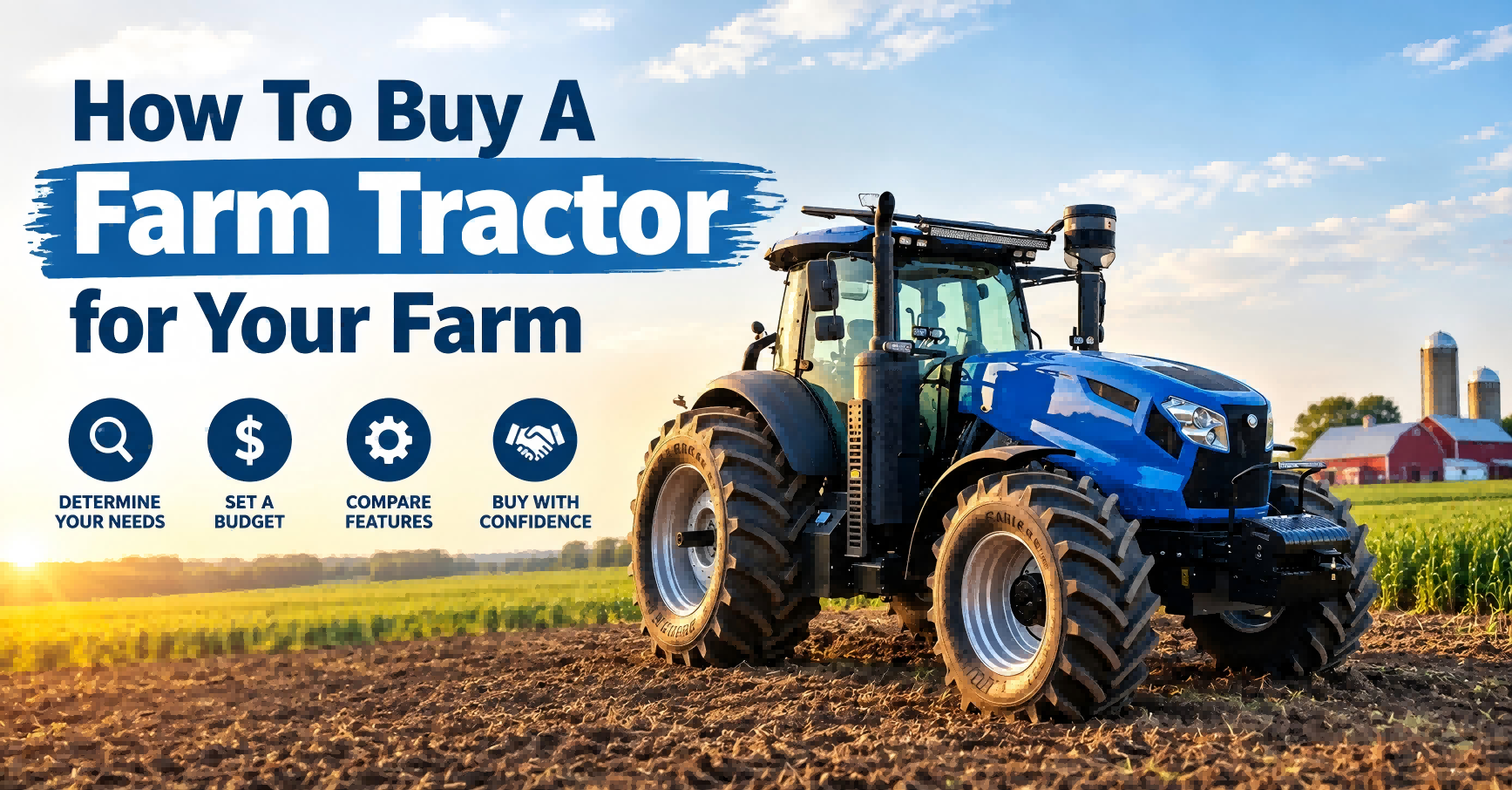
Before comparing tractor specifications, make a list of every task the machine will handle. Different operations place different demands on the engine, transmission, hydraulic system, and chassis.
Common farm tractor applications include:
· Plowing and deep soil preparation
· Rotary tilling and harrowing
· Seeding and fertilizer application
· Crop spraying
· Mowing and baling
· Front-loader material handling
· Trailer transportation
· Orchard and vineyard maintenance
· Paddy-field operations
· Harvest support
The implement and the heaviest regular task should determine the tractor—not farm size alone. A small farm with hard soil and deep plowing requirements may need more power than a larger farm used mainly for mowing or light transportation.
Ask the following questions before contacting a tractor supplier:
· What crops do you grow?
· How many hectares must be completed each day?
· Is the soil dry, sandy, compacted, muddy, or wet?
· Will the tractor work on slopes or uneven land?
· Which implements do you already own?
· Will you use a front-end loader?
· How many operating hours do you expect each year?
· Will the tractor travel on public roads?
The answers establish a practical starting point for tractor selection.
Tractor size influences maneuverability, stability, traction, soil compaction, implement compatibility, and operating cost. A compact tractor is easier to use in narrow areas, while a larger tractor can pull wider and heavier implements.
Tractor range | Typical applications | Suitable operating conditions |
Below 50 HP | Mowing, light tillage, landscaping, small orchards | Small plots and narrow working areas |
50–75 HP | Plowing, seeding, spraying, transportation | Small and medium-sized mixed farms |
75–100 HP | Heavier tillage, baling, loader work | Medium farms and longer operating hours |
100–150 HP | Wide implements, deep tillage, heavy hauling | Medium and large commercial farms |
Above 150 HP | Large implements and intensive fieldwork | Large-scale and high-output operations |
These ranges are general references rather than fixed rules. Implement width, working depth, soil resistance, terrain, and target field capacity can change the power requirement significantly.
Physical dimensions are also important. Orchard and greenhouse operators should check total width, height, wheelbase, and turning radius. Farms with uneven ground or crop rows may place greater importance on ground clearance.
Horsepower is often the first specification buyers compare, but the advertised engine horsepower does not tell the whole story.
Engine Horsepower
Engine horsepower describes the power produced by the engine. It provides a general indication of the tractor’s capacity for pulling, transport, and demanding field operations.
PTO Horsepower
Power take-off horsepower is the usable power delivered to PTO-driven equipment. Some engine power is lost through the drivetrain before it reaches the PTO.
PTO power is especially important when operating:
· Rotary tillers
· Mowers
· Balers
· Feed mixers
· Post-hole diggers
· Sprayers
· Other powered implements
Always compare the tractor’s PTO output with the minimum and recommended requirements of your implements. Matching only the engine horsepower may result in weak implement performance or unnecessary fuel consumption.
A useful approach is to identify the most power-demanding implement and select a tractor that provides a reasonable operating margin. The tractor should not have to work continuously at its maximum output to complete normal tasks.
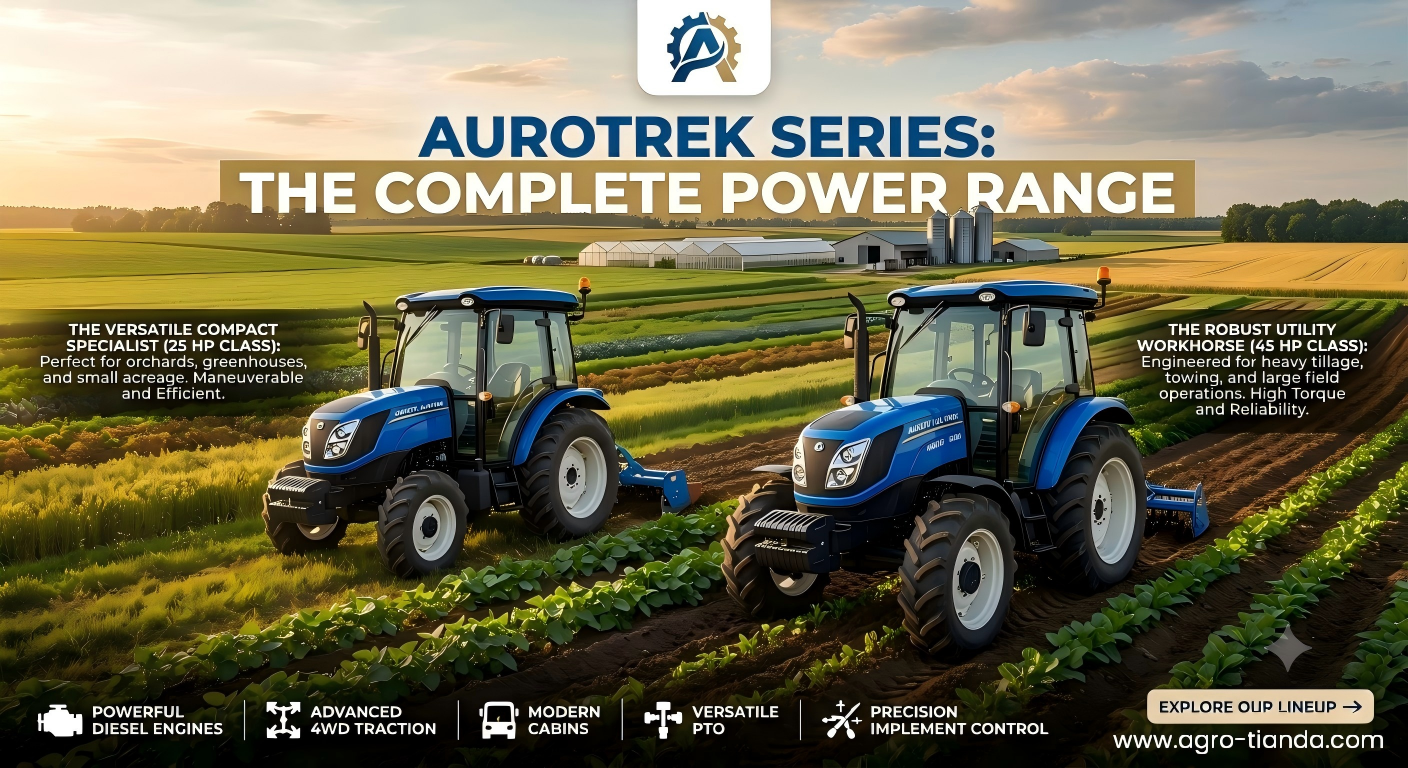
A tractor becomes valuable through the equipment it can operate. For this reason, implement compatibility should be confirmed before the purchase is finalized.
Three-Point Hitch
Check the tractor’s hitch category and maximum lifting capacity. The hitch must match the implement’s connection dimensions and safely support its operating weight.
Do not compare lifting capacity with implement weight alone. A long implement places its center of gravity farther behind the tractor, increasing the load on the hitch and affecting front-wheel stability.
PTO Speed and Shaft
Many agricultural implements use 540 rpm or 1,000 rpm PTO speeds. Confirm:
· Required PTO speed
· PTO shaft type
· Number of splines
· Independent or transmission-driven operation
· PTO rotation direction
· Available PTO horsepower
If the farm uses several attachments, a tractor with multiple PTO speed options offers greater flexibility.
Hydraulic System
Front loaders, tipping trailers, hydraulic mowers, and other attachments depend on hydraulic performance. Ask the supplier to confirm:
· Hydraulic pump flow
· System pressure
· Number of rear hydraulic outlets
· Three-point hitch lifting capacity
· Loader valve compatibility
· Front hydraulic outlet availability
Lift capacity and hydraulic flow are different specifications. A tractor may lift a heavy implement but still operate a hydraulic attachment too slowly if the pump flow is insufficient.
2WD Tractor
A two-wheel-drive tractor may be adequate for light duties on firm, level, and dry ground. It can have a lower purchase price and a simpler drivetrain, but traction is more limited in difficult conditions.
4WD Tractor
A four-wheel-drive farm tractor sends power to both axles, improving traction and control. It is usually more suitable for:
· Wet or muddy fields
· Loose soil
· Sloping terrain
· Heavy tillage
· Loader work
· Pulling large implements
For farms that operate in changing soil and weather conditions, 4WD usually provides greater year-round versatility and reduces excessive wheel slip.
Crawler Tractor
Crawler tractors distribute machine weight over a larger contact area. This can provide better flotation and traction in soft, wet, muddy, or uneven fields. However, buyers should also consider turning behavior, transport speed, undercarriage maintenance, and road-movement requirements.
The best drive system depends on the land rather than horsepower alone.
The transmission affects working speed, ease of operation, fuel efficiency, and control during repeated forward-and-reverse movement.
Manual or Gear Transmission
A manual gearbox is widely used for plowing, tillage, transportation, and other operations performed at a consistent speed. It is mechanically straightforward and suitable for experienced operators.
Synchronized Transmission
A synchronized gearbox makes speed changes easier and smoother. It can be useful when the tractor performs several jobs requiring different working speeds.
Shuttle Shift
A shuttle shift allows the operator to change between forward and reverse more efficiently. It is particularly useful for:
· Front-loader operations
· Material handling
· Yard work
· Repeated maneuvering in confined areas
Hydrostatic Transmission
Hydrostatic transmission provides convenient speed control and is often preferred for mowing, loader operation, and work requiring frequent speed adjustments. Buyers should compare its suitability, efficiency, maintenance requirements, and cost against a conventional gearbox.
Choose the transmission according to the tractor’s main task and operator habits, not simply by the number of gears.
Tire selection affects traction, flotation, soil compaction, fuel use, and crop protection.
Agricultural lug tires provide strong traction for general field operations. Paddy tires are designed for wet and muddy conditions, while wider or radial tires can increase the ground contact area and reduce soil pressure in suitable applications. Industrial-pattern tires may be better for loader, yard, or mixed-surface work.
Also check:
· Front and rear tire dimensions
· Adjustable wheel spacing
· Row-crop clearance
· Availability of replacement tires
· Ballast requirements
· Compatibility with 4WD axle ratios
Incorrectly matched tires on a four-wheel-drive tractor can place unnecessary stress on the drivetrain. Tire changes should therefore be confirmed with the manufacturer.
Horsepower without adequate tractor weight may cause excessive wheel slip during heavy pulling. However, unnecessary weight can increase soil compaction and fuel consumption.
A balanced tractor should provide sufficient traction while remaining suitable for the soil and crops. Wheel weights, front counterweights, and liquid ballast may be used when required, but ballast should be added according to the task and manufacturer’s instructions.
Ground clearance deserves equal attention. Higher clearance can help the tractor pass over crop rows and uneven ground, while a lower center of gravity may provide better stability on slopes.
For front-loader work, verify:
· Front axle capacity
· Loader lifting height
· Rated lifting weight
· Tractor and loader compatibility
· Rear ballast requirements
· Braking and steering performance under load
A loader should be matched to the tractor as a complete system rather than selected as an independent attachment.
Comfort affects productivity when a tractor operates for several hours each day. A basic open-station model may be sufficient for short or seasonal work, but a full cabin provides better protection from dust, noise, heat, cold, and adverse weather.
Useful features may include:
· Adjustable seat and steering wheel
· Clear instrument display
· Easy-to-reach controls
· Heating and air conditioning
· Work lights
· Mirrors and warning lights
· Rollover protective structure
· Seat belt
· Protective PTO guards
A cabin should not be treated as a cosmetic upgrade. For high annual operating hours, improved visibility, noise control, and climate protection can reduce fatigue and support safer operation.
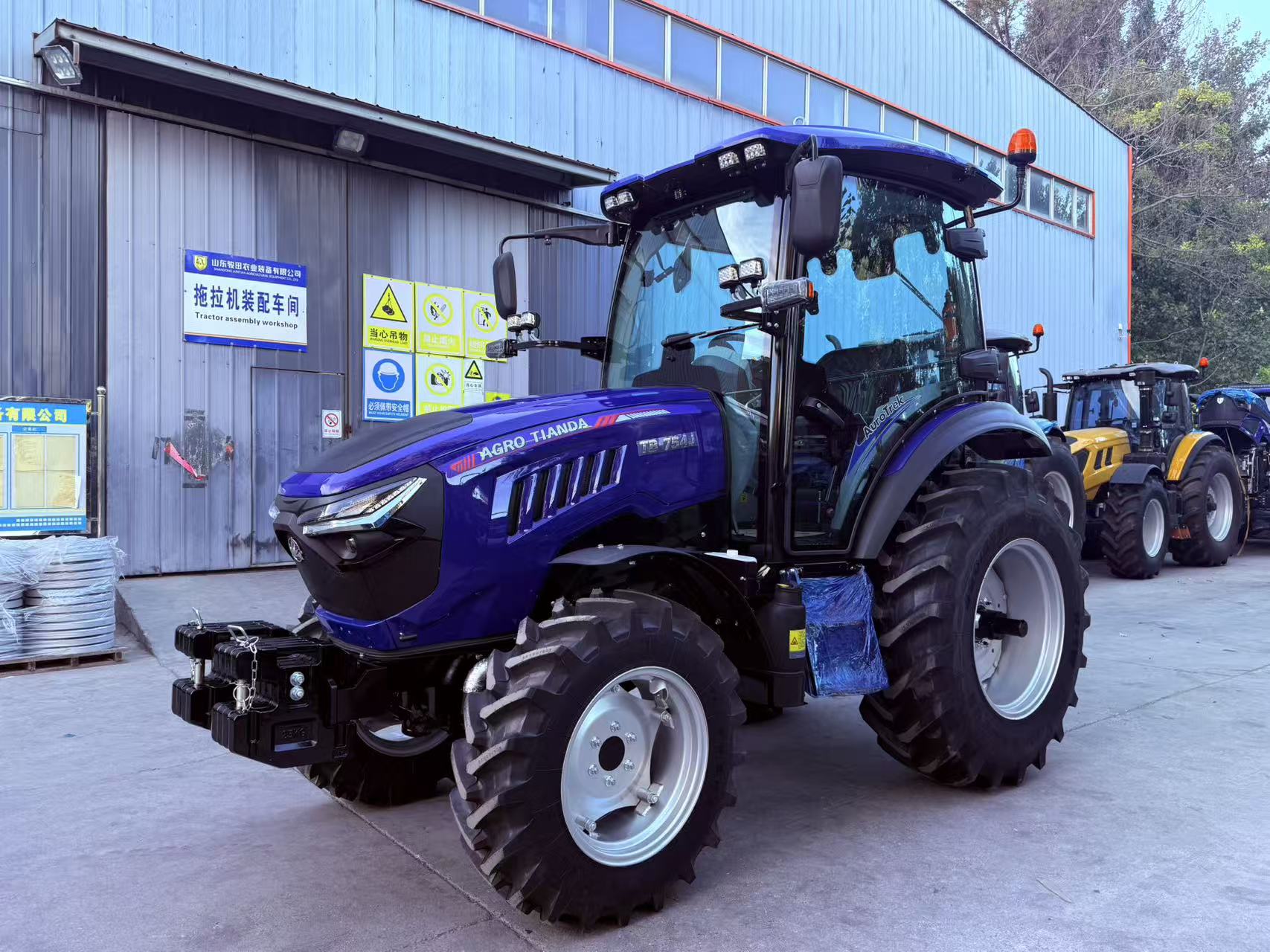
Purchase price is only one part of tractor cost. A lower-priced machine may become expensive if it consumes excessive fuel, requires frequent repairs, or has poor parts availability.
Estimate the following costs:
· Tractor purchase price
· Implements and attachments
· Transportation and import charges
· Local taxes and customs duties
· Fuel and lubricants
· Scheduled maintenance
· Tires and wear parts
· Insurance and registration
· Operator training
· Downtime during peak seasons
· Expected resale value
Fuel consumption should be evaluated under realistic workloads. A tractor that is significantly oversized for routine jobs may operate inefficiently, while an undersized tractor may consume more fuel because it is constantly working under excessive load.
The best value comes from a tractor that completes the required work reliably at a reasonable lifetime cost.
For an international tractor purchase, technical support and spare-parts supply are just as important as the machine specifications.
Before placing an order, ask the supplier for:
· Complete specification sheet
· Engine and transmission details
· Photos and operating videos
· Machinery inspection records
· Available certificates
· Warranty terms
· Spare-parts list
· Recommended maintenance schedule
· Operator and service manuals
· Delivery and production time
· Packing and shipping method
· Remote installation or technical support
· Local fuel and emission compatibility
Confirm which components are covered by the warranty and how a claim will be handled. It is also useful to order routine service parts—such as filters, belts, seals, and commonly used sensors—with the tractor.
AGROTIANDA supplies tractors for different working requirements, including a compact 50HP 4WD farm tractor with cabin and a heavier 120HP 4WD agriculture tractor. Buyers should compare the detailed configuration of each model against their implements and local conditions rather than choosing by horsepower alone.
Before confirming your tractor order, verify the following points:
Buying factor | Questions to confirm |
Farm tasks | What are the heaviest and most frequent jobs? |
Land | What is the farm size, terrain, and soil condition? |
Horsepower | Is there enough engine and PTO power? |
Implements | Do the hitch, PTO, and hydraulics match? |
Drive system | Is 2WD, 4WD, or crawler drive more suitable? |
Transmission | Does it fit the main work and operator experience? |
Tires | Are they suitable for dry land, paddy fields, or road use? |
Dimensions | Can the tractor enter gates, rows, sheds, and orchards? |
Comfort | Is an open station or enclosed cabin more appropriate? |
Safety | Are essential guards and protective structures included? |
Compliance | Does the configuration meet local requirements? |
Service | Are warranty support and spare parts available? |
Delivery | Are production, packing, and shipping details confirmed? |
Cost | What is the complete delivered and operating cost? |
To buy the right farm tractor, begin with your work requirements and implements, then choose the appropriate horsepower, drive system, transmission, PTO, hydraulics, tires, weight, and operator configuration.
Do not select a tractor based only on price or engine horsepower. A correctly matched tractor will operate more efficiently, handle implements more safely, reduce unnecessary fuel and maintenance costs, and remain useful as farm operations develop.
For model selection, configuration confirmation, or shipping information, you can contact AGROTIANDA with details about your farm, crops, terrain, implements, and required working capacity.
How much horsepower does my farm tractor need?
Horsepower depends more on the implements and working conditions than on acreage alone. Identify your widest or most demanding implement, check its engine and PTO power requirements, and allow a practical margin for difficult soil or terrain.
Is a 4WD tractor better for farming?
A 4WD tractor generally provides better traction on wet soil, loose ground, slopes, and uneven land. It is also helpful for loader work and heavy tillage. A 2WD tractor may still be adequate for lighter tasks on firm, level ground.
Should I choose a tractor based on farm size?
Farm size is only one factor. Crops, soil resistance, terrain, implement width, working depth, available labor, and the time allowed to complete fieldwork are equally important.
What PTO speed should a farm tractor have?
Many agricultural implements use 540 or 1,000 rpm. The correct choice depends on the equipment you plan to operate. Confirm PTO speed, shaft type, direction, and available PTO horsepower before buying.
Is a tractor cabin worth the additional cost?
A cabin is valuable for long operating hours or work in dusty, noisy, hot, cold, or wet conditions. It can improve operator comfort and reduce fatigue. For short, occasional work in mild conditions, an open-station tractor may be sufficient.
What information should I send to a tractor manufacturer?
Provide your farm size, crops, terrain, soil conditions, intended applications, implement types, preferred horsepower, cabin requirements, tire type, destination country, and local compliance requirements. More complete information helps the manufacturer recommend a suitable configuration.
What spare parts should I order with a new tractor?
Consider purchasing filters, belts, seals, fuses, lamps, and other routine service parts. The exact list should follow the tractor model, expected annual operating hours, and local access to replacement components.


