

Views: 0 Author: Site Editor Publish Time: 2026-08-20 Origin: Site
A tractor can have enough engine power yet still fail at your hardest job. The wrong hitch, weak hydraulics, or low lift capacity can stop work quickly.
So, what is the best small farm tractor? It is the machine matching your recurring tasks, land, implements, safety needs, and support plan.
This guide explains power, traction, attachments, daily-use features, and quotation checks. You can choose useful capacity without paying for wasteful size.
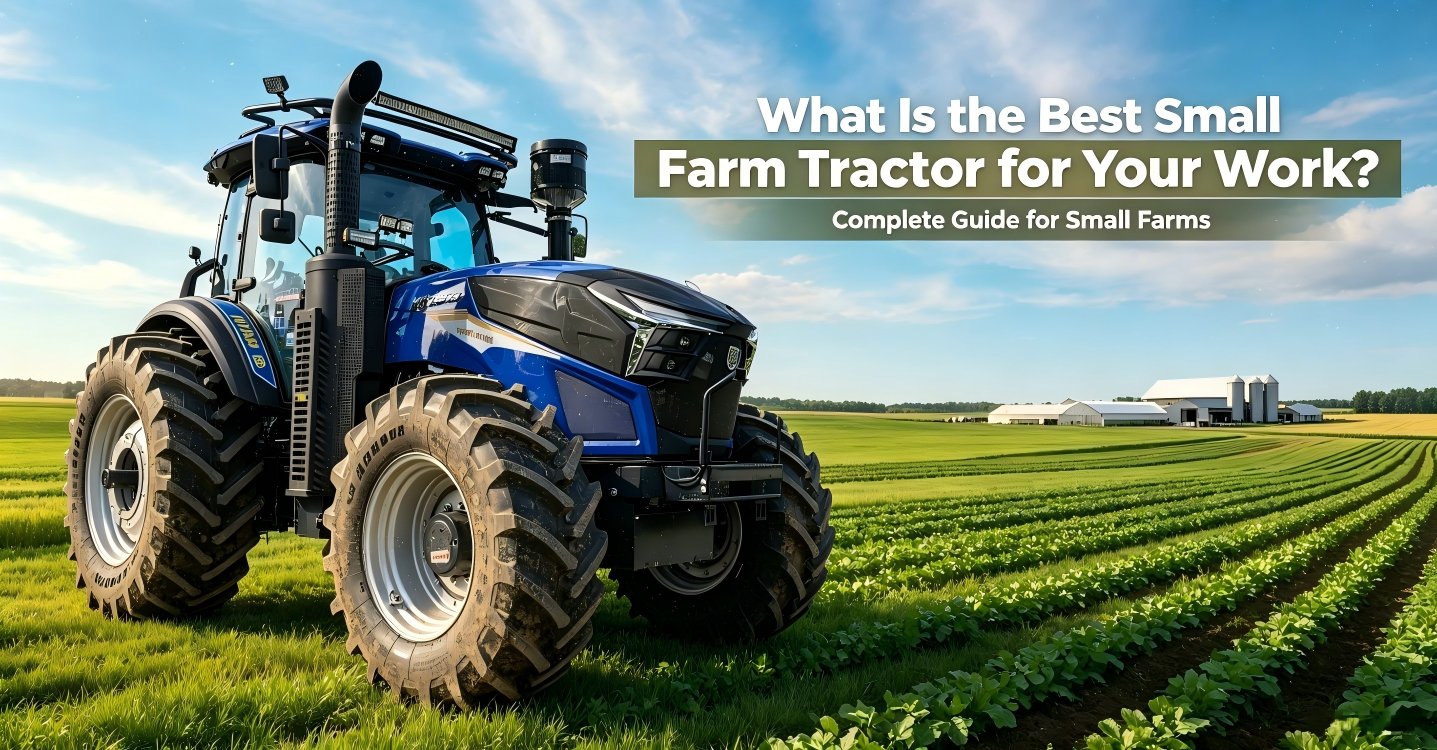
The best tractor for a small farm solves frequent, expensive, or tiring jobs. Acreage helps frame the search, but it cannot identify the right machine alone. Ten flat mowing acres differ greatly from five muddy livestock acres.
Write down every job expected during a full year. Record its frequency, required implement, heaviest load, working width, and ideal completion time. Rank daily feeding or weekly mowing above a rare land-clearing project.
Main work | Capacity that matters most | Common implement |
Mowing and brush control | PTO power, stability, turning room | Finish mower or rotary cutter |
Soil preparation | Traction, weight, PTO power | Plow, disc, or rotary tiller |
Material handling | Loader lift, ballast, hydraulic capacity | Bucket, forks, or bale spear |
Planting and cultivation | Low-speed control, clearance, row fit | Seeder or cultivator |
Hauling and fencing | Brakes, drawbar rating, hydraulic outlets | Trailer or post-hole auger |
Some heavy jobs may be cheaper to rent or contract. Buying a much larger tractor for several annual hours raises fuel, implement, transport, and storage costs. Size your purchase around repeated work, then hire specialized capacity when sensible.
Measure gates, orchard rows, barn doors, high tunnels, headlands, and storage space. Check slopes, soft ground, drainage areas, stumps, and overhead clearance. Tractor width, height, wheelbase, turning radius, and operating weight must suit those limits.
Also consider who will operate it. Control layout, visibility, entry height, clutch effort, and transmission behavior affect daily output. A comfortable machine is useful only when it still fits the farm.
For example, an Agrotianda 40HP 4WD open-frame tractor is presented for small farms, orchards, and tight spaces. Its stated uses include plowing, tilling, seeding, and hauling. That configuration may create a useful baseline, but buyers should match its full dimensions and capacities to their own task sheet.
Engine horsepower describes output at the engine. PTO horsepower is the usable power available to a driven implement. The PTO figure is lower, so an engine rating cannot confirm mower, tiller, pump, or baler compatibility.
Weight and traction solve different problems. Adequate mass helps transfer power to the ground and stabilizes loader work. Four-wheel drive improves traction, yet it does not create more engine or PTO power.
Loader capacity also stands alone. Compare the rating height and measurement point, because capacity at the pivot pins differs from capacity farther forward. Add the attachment, payload, and required safety margin before selecting a loader.
The Cornell Small Farms Program guide offers broad planning ranges. They help narrow choices, but the hardest implement should set your final minimum.
Farm and work pattern | Planning range | Typical jobs | Main caution |
Under 10 acres, light work | 20–40 HP | Mowing, cultivation, light hauling | Loader or soil demands may require more capacity |
10–25 acres, mixed work | 40–70 HP | Tillage, livestock chores, planting, light hay work | Verify every implement's PTO and lift needs |
Over 25 acres or heavy work | 70+ HP | Heavy tillage, larger hay tools, demanding loading | Physical size and cost may exceed small-farm needs |
A 40HP tractor can suit orchard maintenance and routine cultivation. A 50HP tractor provides more reserve for wider tillage tools, heavier hauling, or frequent loader work. Neither number guarantees performance without PTO, hydraulic, lift, weight, and tire data.
Build power reserve carefully. Constantly operating at the limit can slow work and increase wear. However, unused horsepower costs money and often requires larger implements. Choose enough capacity for the toughest recurring job, not an unlikely future project.
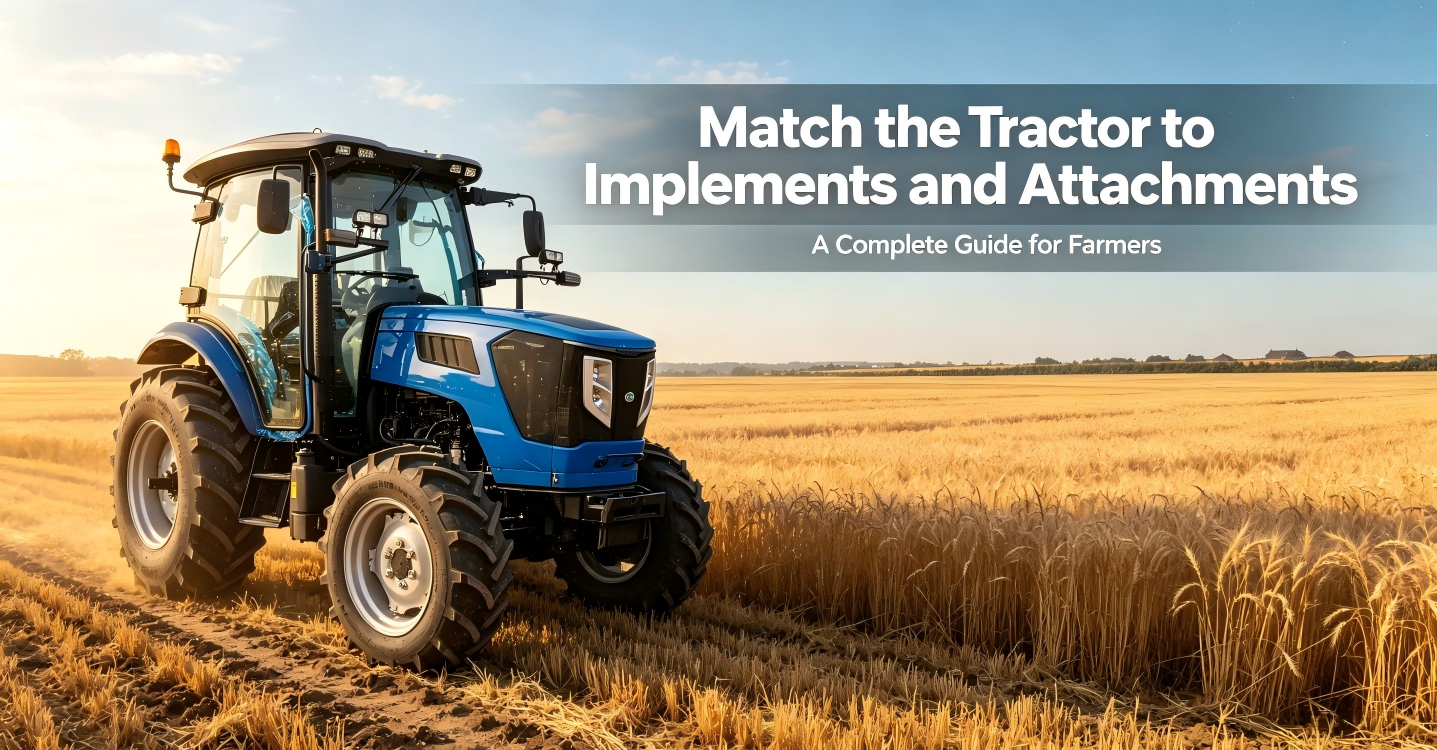
A tractor becomes productive through its implements. Start with their manuals or supplier specifications, then work backward to the tractor. Each attachment creates several compatibility checks, not one horsepower question.
Confirm the three-point hitch category, PTO speed, required PTO horsepower, implement mass, and lift capacity. Check hydraulic flow, pressure, couplers, rear remotes, and any third-function requirement. Also verify drawbar limits, transport width, tire clearance, and counterweight needs.
Implement | Primary work | Critical matching checks |
Front-end loader | Soil, feed, manure, pallets | Lift height, rated point, hydraulics, ballast |
Rotary cutter or mower | Grass and brush | PTO HP, PTO speed, width, terrain stability |
Tiller, plow, or disc | Seedbed preparation | PTO or draft demand, traction, working width |
Seeder or planter | Crop establishment | Hitch category, row spacing, hydraulic outlets |
Post-hole auger | Fencing and planting | PTO speed, auger size, guarding, clearance |
Forks or bale spear | Material and feed handling | Actual load center, loader rating, rear ballast |
Trailer | Crop and material transport | Drawbar rating, brakes, legal towing limits |
Many first-time buyers gain the most from a loader, mower, and soil tool. Livestock farms may prioritize forks or a bale spear. Vegetable operations may spend more time using a tiller, bed shaper, seeder, or cultivator.
Do not buy every attachment immediately. Choose tools that replace the most labor or outside expense first. Leave hydraulic outlets, lift capacity, and power reserve for likely additions.
The Agrotianda 50HP 4WD tractor with agricultural implements provides a practical specification example. Its page lists an 8+8 gearbox, 540/1000 rpm PTO, and compatibility with loaders, plows, harvesters, and trailers. Buyers should still request one signed configuration sheet, because hitch, mass, engine, hydraulics, emissions, and implement packages may vary.
Four-wheel drive is valuable on mud, slopes, loose soil, and loader jobs. It improves usable traction and steering control under many conditions. Proper ballast and suitable tires remain necessary, especially when carrying raised loads.
Transmission choice should follow the work. Hydrostatic drive offers simple speed changes during loader work, mowing, and frequent direction changes. A gear or shuttle transmission can deliver efficient pulling and predictable working speeds. Test control effort and low-speed behavior before deciding.
Hydraulics determine which powered attachments can work correctly. Compare pump flow at usable outlets, not only total pump output. Rear remotes support cylinders on blades, planters, or top-and-tilt systems. A loader third function may be required for a grapple.
Tires change grip, soil disturbance, and road behavior. Agricultural tread favors field traction. Industrial tread offers a durable compromise for mixed surfaces. Turf tires protect lawns but may struggle in wet field conditions. Ask whether wheel spacing and ballast options suit your slopes and crop rows.
An open station improves visibility, entry, and overhead clearance. It usually lowers purchase cost as well. A cab reduces exposure to dust, noise, heat, cold, and spray. Confirm total height, ventilation, filtration, and local climate needs.
Daily service access matters too. Check grease points, filter reach, fluid checks, battery access, and hood opening. Simple inspections reduce skipped maintenance, while available filters shorten downtime.
Request a rollover protective structure, compatible seatbelt, PTO master shield, dependable brakes, and parking lock. Also verify lights, mirrors, guarded drivelines, and clear safety labels. OSHA guidance explains how ROPS, seatbelt use, PTO guarding, and trained operation reduce serious hazards.
Safety hardware cannot correct an unstable configuration. Keep loads low during travel, use required rear ballast, and avoid abrupt turns. Never exceed the tractor, loader, tire, hitch, or implement rating. Local regulations and the operator's manual should govern setup and use.\
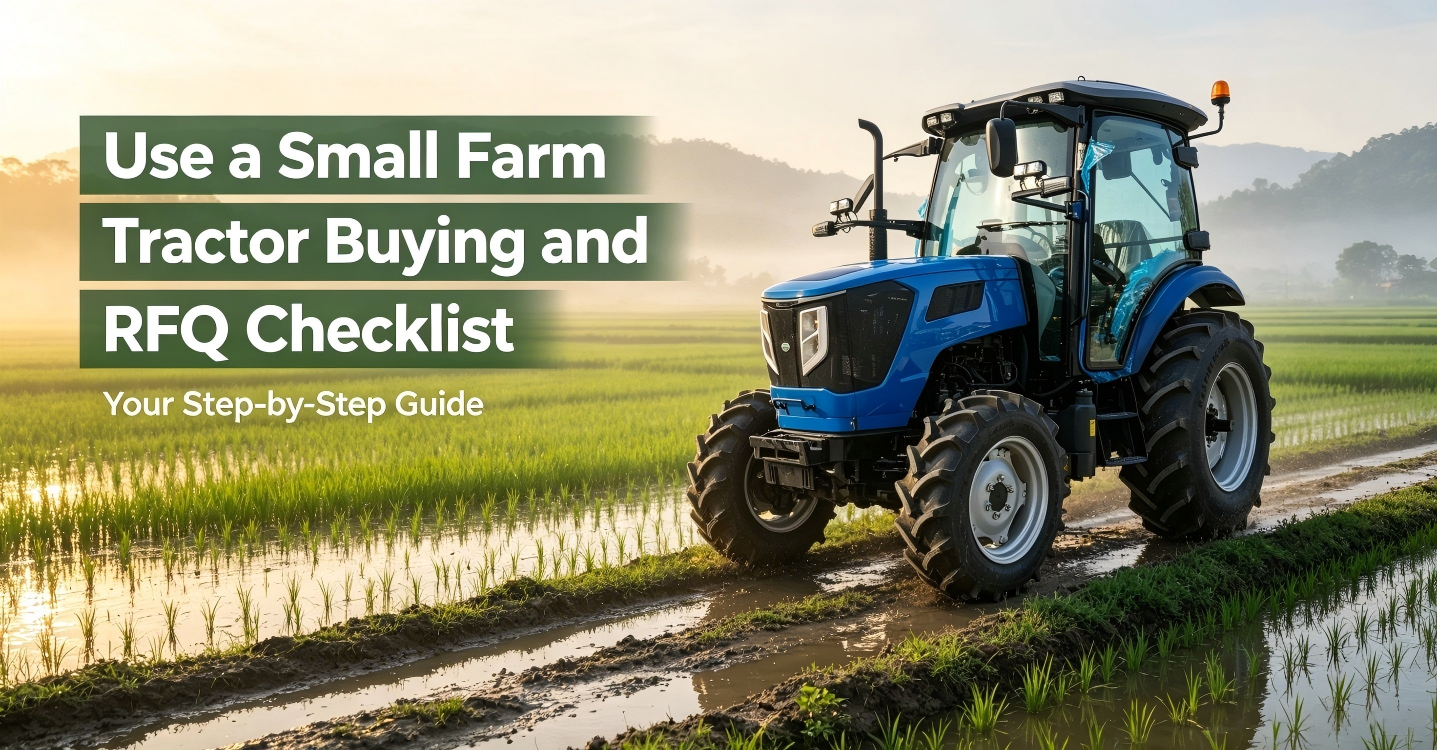
Compare tractors in ready-to-work form, not by engine horsepower or base price. Ask every supplier to complete the same request-for-quotation sheet. Written answers expose missing equipment and make landed costs easier to compare.
RFQ item | What the supplier should state |
Tractor size and mass | Overall dimensions, wheelbase, clearance, operating mass |
Powertrain | Engine HP, PTO HP, rated speed, transmission, 4WD |
Implement interfaces | PTO speeds, hitch category, lift capacity, drawbar rating |
Hydraulics and loader | Flow, pressure, remotes, third function, lift rating and reference point |
Tires and stability | Tread type, size, wheel spacing, ballast options |
Safety and compliance | ROPS, seatbelt, guards, brakes, emissions, required certificates |
Commercial package | Implements, spare parts, warranty, manuals, lead time, Incoterm |
Add freight, insurance, duties, taxes, port charges, inland delivery, assembly, and commissioning. Include filters, belts, seals, lubricants, and common wear parts. A lower factory price can produce a higher working cost when essentials are excluded.
For a new tractor, request warranty terms, parts lists, service schedules, diagnostic support, and response times. Confirm who handles a failure locally. For a used tractor, inspect operating hours, cold starting, leaks, tires, PTO, hydraulics, clutch, brakes, steering, loader pins, and maintenance records.
Agrotianda reports more than 20 years of agricultural machinery experience, manufacturing facilities, manuals, warranty support, and ongoing spare-parts service. Treat those points as questions for the sales contract. Confirm the exact warranty, parts availability, technical contact, local compliance, and support method for your destination.
Finally, calculate cost per productive hour. Include financing, fuel, maintenance, downtime, depreciation, implements, and resale potential. The best compact tractor for a small farm is the supported package completing your real workload safely and on time.
The best small farm tractor is not the model carrying the largest horsepower number. It matches repeated work, physical access, terrain, and every important implement.
Choose from verified PTO, loader, hitch, hydraulic, and safety specifications. Then compare complete costs, parts support, and future capacity. A well-matched tractor saves labor without bringing unnecessary size or expense.
A: Many small farms begin around 20–50 HP. Choose from the hardest recurring implement, not acreage alone.
A: It is highly useful for mud, slopes, tillage, and loader work. Correct tires and ballast remain essential.
A: Start with tools replacing the most labor. Common choices include a loader, mower, tiller, blade, or forks.
A: Choose 40HP for lighter, tighter work. Consider 50HP for heavier implements, hauling, or loader reserve.
A: Verify PTO power, hitch, hydraulics, lift ratings, dimensions, safety equipment, compliance, warranty, parts, and landed cost.


