

Views: 0 Author: Site Editor Publish Time: 2026-09-09 Origin: Site
A live PTO is a power take-off system that lets a tractor keep powering an implement even when the tractor stops moving or changes gear. It is especially useful for PTO-driven equipment such as rotary mowers, tillers, balers, spreaders, and pumps.
In simple terms, a live PTO separates tractor travel from implement operation. The operator can stop the wheels without immediately stopping the PTO shaft, giving better control during demanding farm work.
Most traditional live PTO systems use a two-stage clutch. The clutch pedal controls two functions at different points in its travel:
Clutch pedal position | Tractor movement | PTO-driven implement |
Pedal released | Tractor moves | PTO operates |
Pedal pressed halfway | Tractor stops or can be shifted | PTO continues operating |
Pedal fully pressed | Tractor stops | PTO disengages |
When the operator presses the clutch partway down, power to the transmission is interrupted, so the tractor can stop or change gears. However, power continues flowing to the PTO shaft. Pressing the pedal fully disengages both the transmission and PTO.
This arrangement is valuable when an implement needs steady rotation while the tractor pauses. For example, a mower can keep cutting as the operator slows near an obstacle, or a baler can maintain its working cycle during a brief stop.
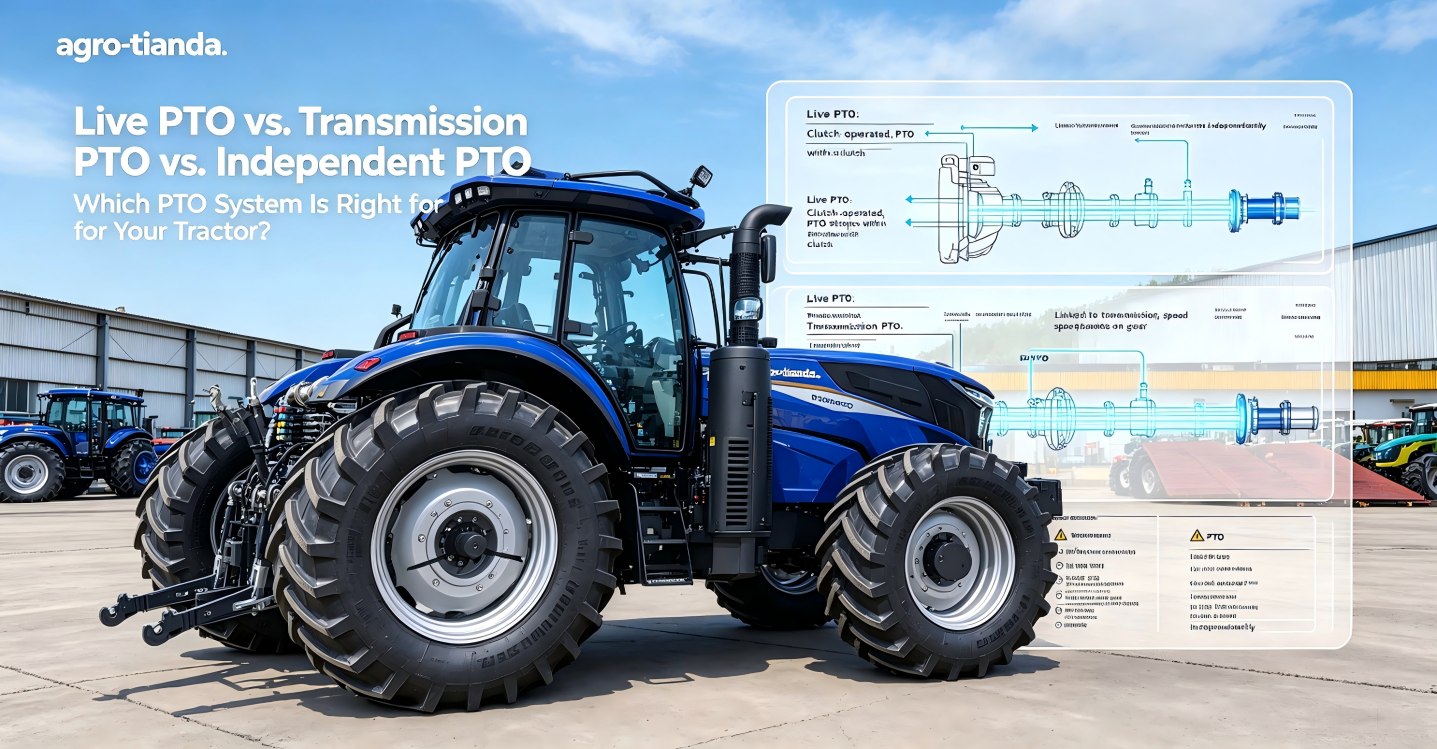
Not every tractor PTO works in the same way. Understanding the difference helps buyers select a tractor that matches their implements and field routine.
PTO type | How it operates | Best suited for |
Transmission PTO | PTO is tied to the main clutch and transmission | Simple, lower-demand operations |
Live PTO | A two-stage clutch separates tractor movement from PTO operation | Mowing, tilling, baling, and work requiring frequent stops |
Independent PTO | PTO has a separate control system, often mechanical or hydraulic | Frequent PTO engagement, complex implement work, and maximum convenience |
A transmission-driven PTO stops when the operator depresses the clutch. This can interrupt a mower, tiller, or other implement every time the tractor slows down or shifts.
A live PTO is a major improvement because the implement can continue running while the tractor is temporarily stopped. An independent PTO provides even greater separation, since the PTO can usually be engaged or disengaged with a dedicated control rather than through clutch-pedal stages.
A live PTO should not automatically be described as an independent PTO. Both improve implement control, but they use different operating systems.
The main benefit is smoother operation. PTO-powered equipment often needs consistent shaft speed to work efficiently. Repeatedly stopping and restarting that equipment can reduce output, create uneven results, and add stress to the driveline.
A live PTO helps operators:
Stop and shift while maintaining implement rotation
Work more smoothly at headlands and tight turns
Maintain momentum in rotary mowers and tillers
Reduce interruptions during baling or other continuous operations
Improve control when field conditions change
Match travel speed more accurately to the task
Consider rotary mowing. The tractor may need to slow for a ditch, tree, fence line, or uneven patch of ground. With a transmission PTO, pressing the clutch also cuts power to the mower. With a live PTO, the operator can stop forward travel while the blades continue running, then resume work without waiting for the implement to regain speed.
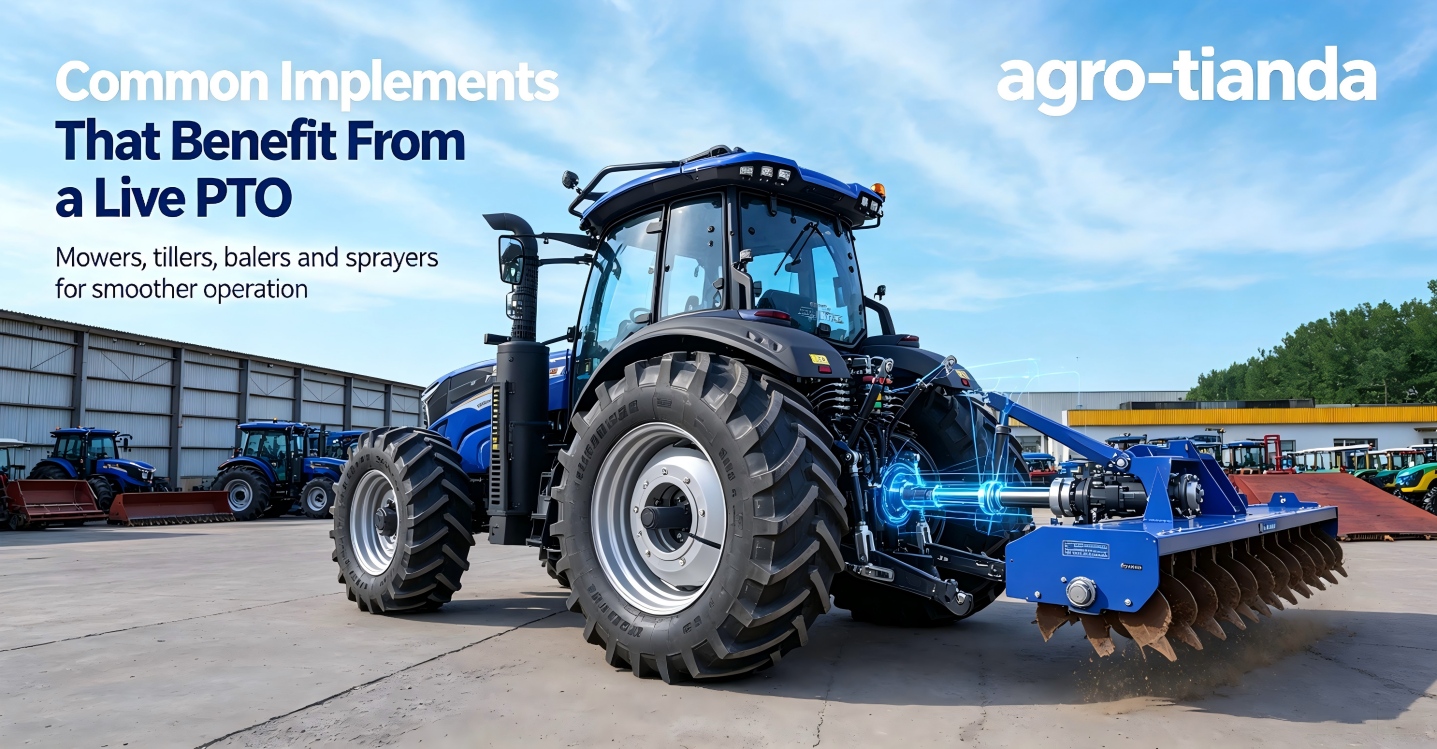
A live PTO is particularly helpful when the implement has rotating components that should keep working during short pauses.
Common examples include:
Rotary cutters and finish mowers
Rotary tillers
Balers
Hay rakes
Fertilizer spreaders
Post-hole diggers
Pumps and generators
Feed-processing equipment
Some seeders and harvesting attachments
The value depends on the job. A simple drawbar trailer does not need PTO power, while a tiller or mower depends on consistent PTO performance. Before choosing a tractor, list each implement you use or plan to add, then compare its PTO-speed, PTO-power, hitch, hydraulic, and safety requirements.
For a broader view of matching tractor capacity to attachments, see this small farm tractor and implement guide.
Yes—when the farm regularly uses PTO-driven equipment. The improvement is not simply about higher horsepower. It is about preserving control over the implement while managing tractor movement.
A live PTO helps the operator make more deliberate stops, shifts, and speed adjustments. This can reduce the time lost to implement wind-down and restart. It also makes it easier to maintain a steady work pattern in irregular fields, around obstacles, or during jobs that require frequent maneuvering.
However, a live PTO does not replace proper tractor-to-implement matching. Buyers should still confirm:
Available PTO horsepower
PTO speed, commonly 540 rpm or 1,000 rpm
PTO shaft size and compatibility
Three-point hitch category and lift capacity
Tractor weight, ballast, and traction
Hydraulic requirements
Required guards and safety equipment
Engine horsepower alone is not enough. The PTO horsepower available at the shaft is the more relevant figure for a mower, tiller, pump, or other driven attachment.
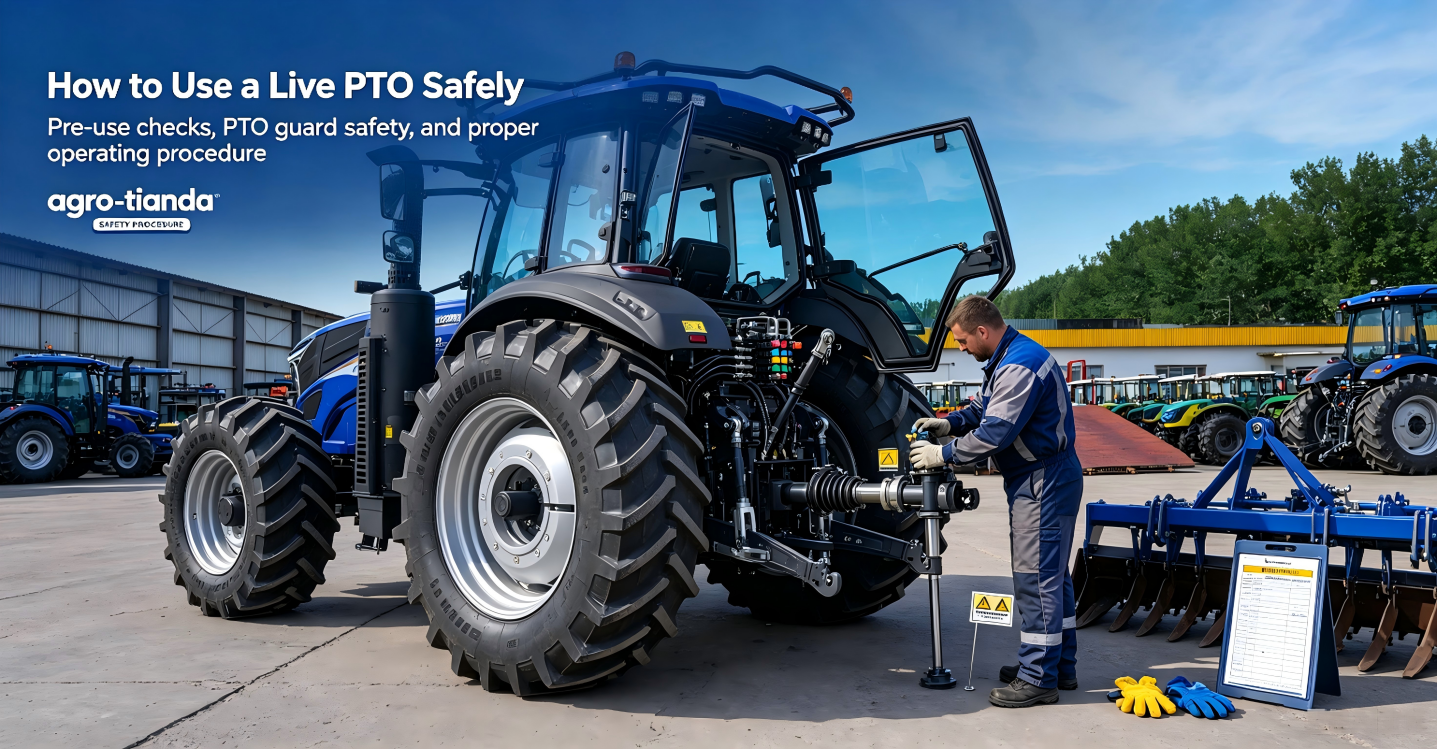
A live PTO gives more control, but the PTO shaft remains one of the most hazardous moving parts on a tractor. Treat it with respect every time it is used.
Follow these practical safety rules:
Read the tractor and implement manuals before operation.
Ensure the tractor PTO master shield and implement driveline guards are in place.
Keep loose clothing, hair, tools, and bystanders away from the rotating shaft.
Never step over a rotating PTO driveline.
Disengage the PTO, stop the engine, remove the key, and wait for all motion to stop before clearing debris or making adjustments.
Match the implement’s required PTO speed before engaging it.
Start at low engine speed when appropriate, then increase to the required operating rpm gradually.
Use correct ballast and avoid sharp turns or travel with raised, heavy implements.
The ability to keep an implement running while the tractor is stopped is useful—but it also means the operator must remain fully aware that the connected equipment may still be rotating.
A live PTO is a practical choice for farms that regularly mow, till, bale, spread, or operate other PTO-driven equipment. It offers better workflow control than a basic transmission PTO and can make daily implement work less interrupted and more precise.
When comparing tractors, ask the supplier to state the PTO type clearly. Also request the PTO horsepower, available PTO speeds, clutch design, implement compatibility, and safety configuration in writing. This prevents confusion between live PTO, independent PTO, and a standard transmission-driven PTO.
Agrotianda offers a range of farm tractors for different power levels, terrain conditions, and implement requirements. For help matching PTO capability, tractor size, and attachments to your operation, contact the Agrotianda team.
Yes. With a typical two-stage live PTO clutch, pressing the clutch halfway stops tractor travel while allowing the PTO-driven implement to continue operating.
No. A live PTO and an independent PTO both separate implement operation from tractor movement, but a live PTO normally uses a two-stage clutch while an independent PTO uses a separate PTO control system.
Yes. It is highly useful for mowing because it lets the blades keep turning when the tractor slows, stops, or shifts during normal field operation.
No. A live PTO improves control over power delivery. PTO horsepower still depends on the tractor’s engine, drivetrain, and rated PTO output.
No. Always verify the implement’s required PTO speed, PTO horsepower, hitch category, driveline size, weight, hydraulic needs, and safety requirements before use.


