

Views: 0 Author: Site Editor Publish Time: 2026-08-06 Origin: Site
A tractor may look slow, yet speed is not its real job. It turns engine power into force for useful work.
If you have searched “what does tractor mean,” the simple answer only starts the story. Tractors differ by field, crop, terrain, and attached equipment.
This guide explains tractor meaning, main types, working systems, uses, applications, selection points, and essential safety practices.
The word “tractor” describes a machine designed to pull or draw another object. A modern tractor produces strong tractive effort and high torque at relatively low speeds. Those qualities help it move heavy implements across soil, mud, slopes, and rough ground.
Most people mean a farm tractor when using the term. However, “tractor” can also describe a tracked construction machine or a truck’s powered front unit. The surrounding industry decides the meaning. This article focuses mainly on agricultural tractors.
A tractor differs from a passenger vehicle because transportation is not its only purpose. It is better understood as a mobile power platform. One machine can prepare soil, plant crops, operate a mower, lift materials, or tow a loaded trailer.
Early steam traction engines mainly replaced animal pulling power. Diesel engines later improved range, durability, and fuel efficiency. PTO systems, hydraulic lifts, and standardized hitches then changed tractors into flexible machines for many seasonal jobs.
The engine sends power through several working systems. Each system serves a different group of tractor implements and attachments.
Drawbar and three-point hitch: The drawbar pulls trailers or trailed equipment from one connection point. A three-point hitch carries and controls mounted implements. Hydraulic lift lets the operator raise, lower, and position them from the seat.
Power take-off: The PTO transfers rotating engine power to equipment such as mowers, balers, pumps, and rotary tillers. Engine horsepower and PTO horsepower are not identical. Buyers should use the implement’s PTO requirement when matching equipment.
Hydraulic and electrical power: Hydraulic circuits move loader arms, cylinders, steering systems, and implement controls. Modern electrical connections support lights, monitors, sensors, and precision systems. An ASABE overview of tractor power explains these different transfer methods.
This system-based definition also guides Agrotianda, a smart-agriculture equipment manufacturer with over 20 years of industry experience. Its tractor development sits within a broader crop-production machinery portfolio.
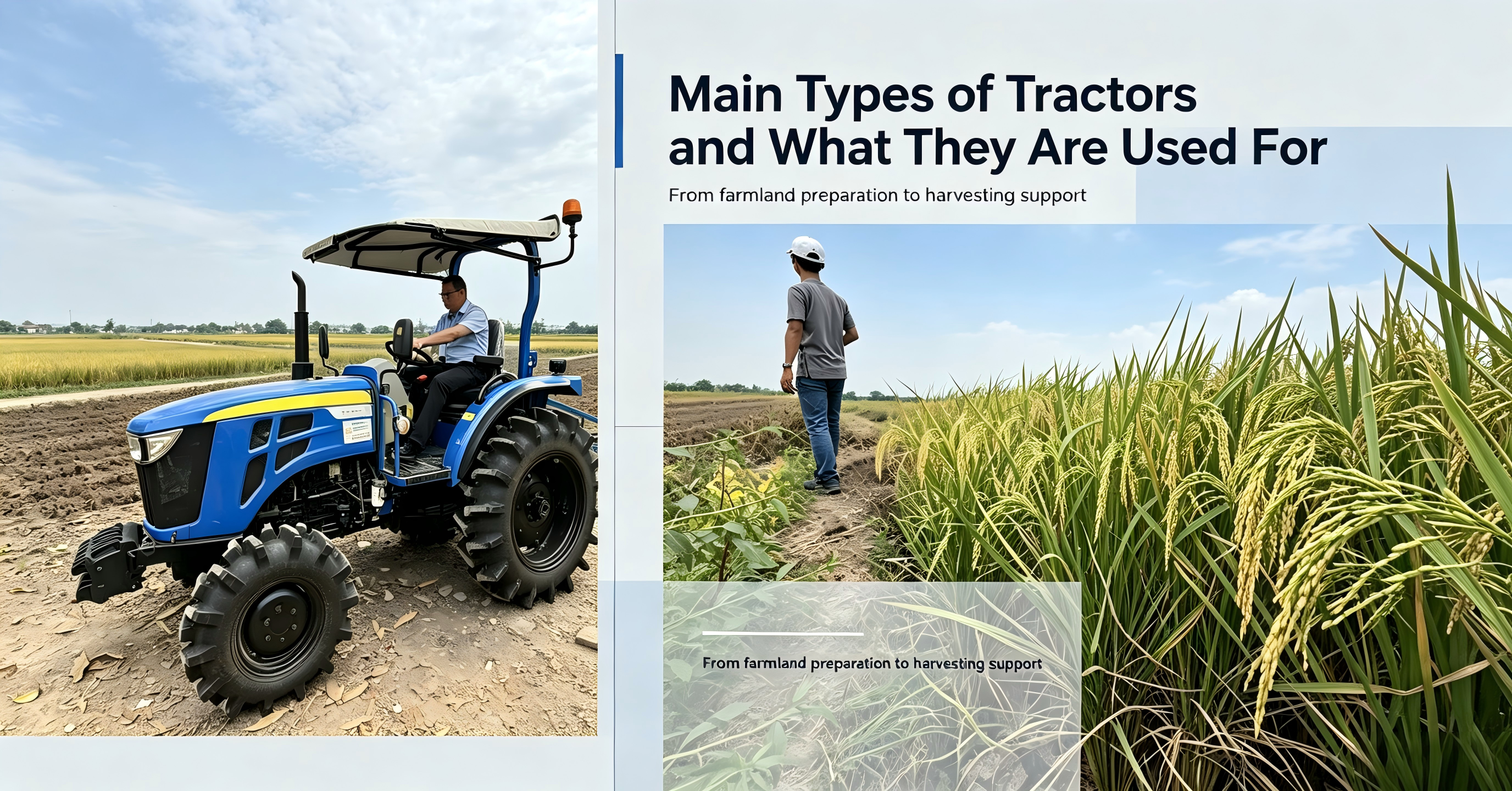
Tractor names usually reflect size, movement system, crop, or working environment. These categories sometimes overlap. For example, a compact tractor may also be a utility tractor, while a row-crop model may use 4WD.
Tractor type | Main design features | Typical uses |
Utility tractor | Medium size, versatile hitch, PTO, optional loader | Tillage, mowing, hauling, livestock work |
Compact or subcompact tractor | Short wheelbase, tight turning, lighter implements | Small farms, gardens, landscaping, snow removal |
Row-crop tractor | Adjustable track width, crop clearance, precise steering | Planting, cultivating, spraying, inter-row work |
Orchard tractor | Narrow body, low profile, protected surfaces | Spraying, mowing, hauling between trees or vines |
High-horsepower 4WD tractor | Heavy chassis, strong traction, high implement capacity | Deep tillage, wide seeders, large-scale field work |
Crawler tractor | Rubber or steel tracks, large ground contact area | Soft ground, slopes, heavy pushing, land clearing |
Two-wheel tractor | Single powered axle, walking operator, compact tools | Small plots, vegetable beds, wet paddies |
Industrial tractor | Reinforced frame, loader or engineering attachments | Digging, grading, lifting, construction support |
Size alone never determines suitability. A large tractor may compact wet soil, damage orchard branches, or turn poorly inside small fields. A smaller unit may lack the weight, cooling capacity, PTO power, or hydraulic flow needed for continuous heavy work.
Start with the heaviest implement and most demanding terrain. Then consider row spacing, gate width, ground clearance, lifting height, transport distance, and operating hours. Wheel tractors suit most mixed farm work, while tracks improve flotation on certain soft surfaces.
A Farm tractor manufacturer should help buyers size the machine around the job, rather than only around engine output. Agrotianda’s product range includes configurations for farmland,
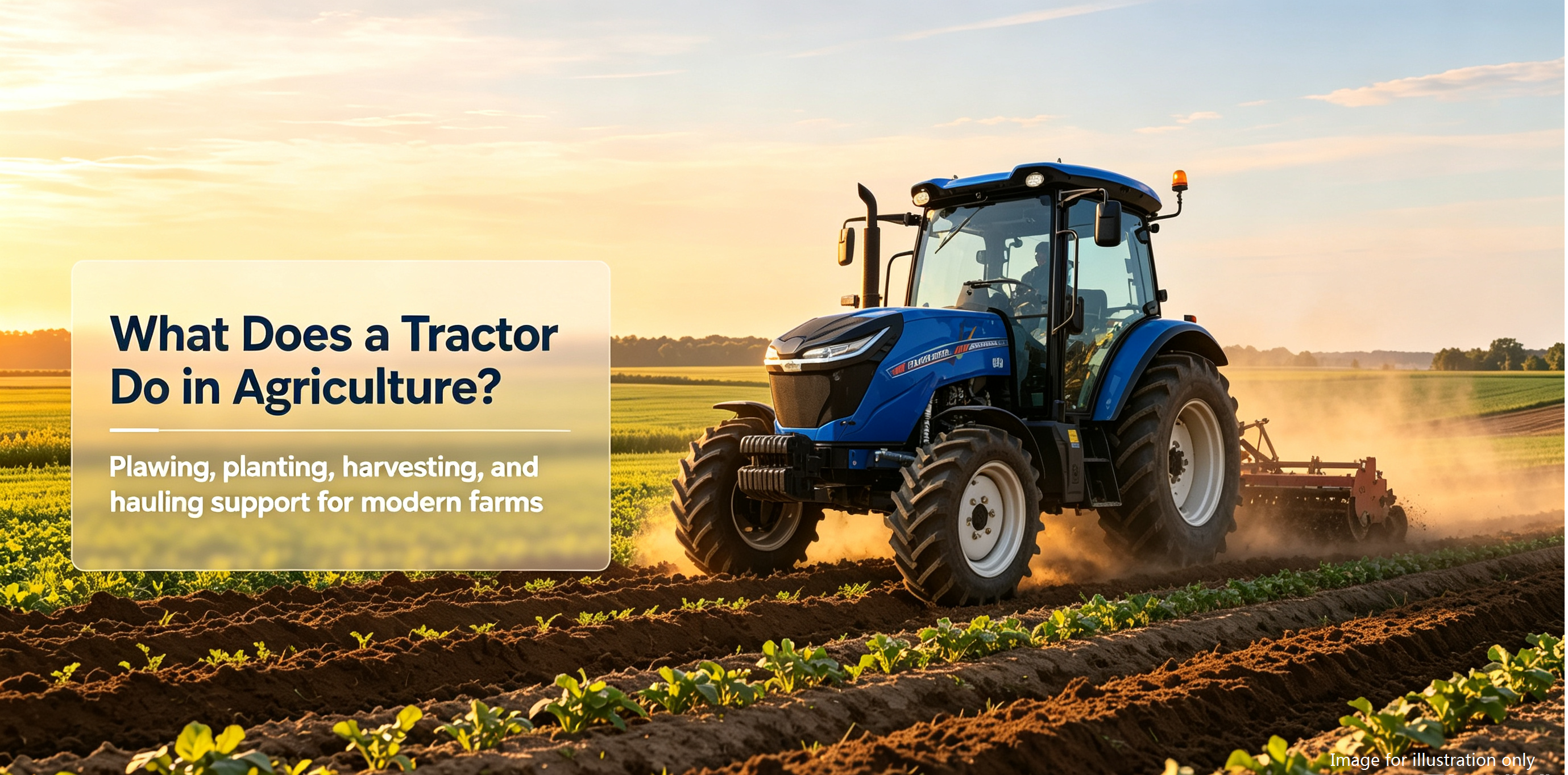
What is a tractor used for on a farm? Its role changes as the crop moves from soil preparation to harvest. The same power unit can handle many jobs after the operator changes implements.
Prepare the seedbed: Plows open and turn soil, while discs and harrows break clods. Rotary tillers create a finer surface for smaller seeds. Correct depth and travel speed help limit wasted fuel and excessive soil disturbance.
Plant and establish crops: Seed drills and planters place seed at controlled depths and spacing. Transplanter support, fertilizer placement, and bed shaping may follow. Hydraulic controls keep equipment stable across uneven ground.
Manage growing fields: Cultivators remove weeds between rows without harming crops. Sprayers and spreaders distribute crop-protection products or nutrients. Mowers control grass around orchards, roads, and field edges.
Support harvest and handling: Tractors power balers, forage equipment, pumps, and other PTO-driven machines. Front loaders lift bales, feed, soil, fertilizer, or harvested produce. Trailers move inputs into fields and crops toward storage.
Maintain the farm: A tractor can grade lanes, clean livestock areas, run an auger, or clear snow. Forks, blades, buckets, and backhoes extend its use beyond crop operations. Each attachment must remain within approved lift and axle ratings.
A tractor only creates value when it matches its implements. A heavy plow needs enough drawbar force and traction. A mower needs the correct PTO speed and power, while a loader depends on hydraulic flow, pressure, lift capacity, and ballast.
Timely field work often matters more than maximum engine output. A balanced tractor-implement combination covers land during short planting or spraying windows. It also reduces wheel slip, fuel use, soil compaction, and premature component wear.
Before connecting equipment, verify hitch category, PTO shaft, rotation speed, hydraulic couplers, electrical plugs, and total weight. Compatibility protects the machine, crop, operator, and work schedule.
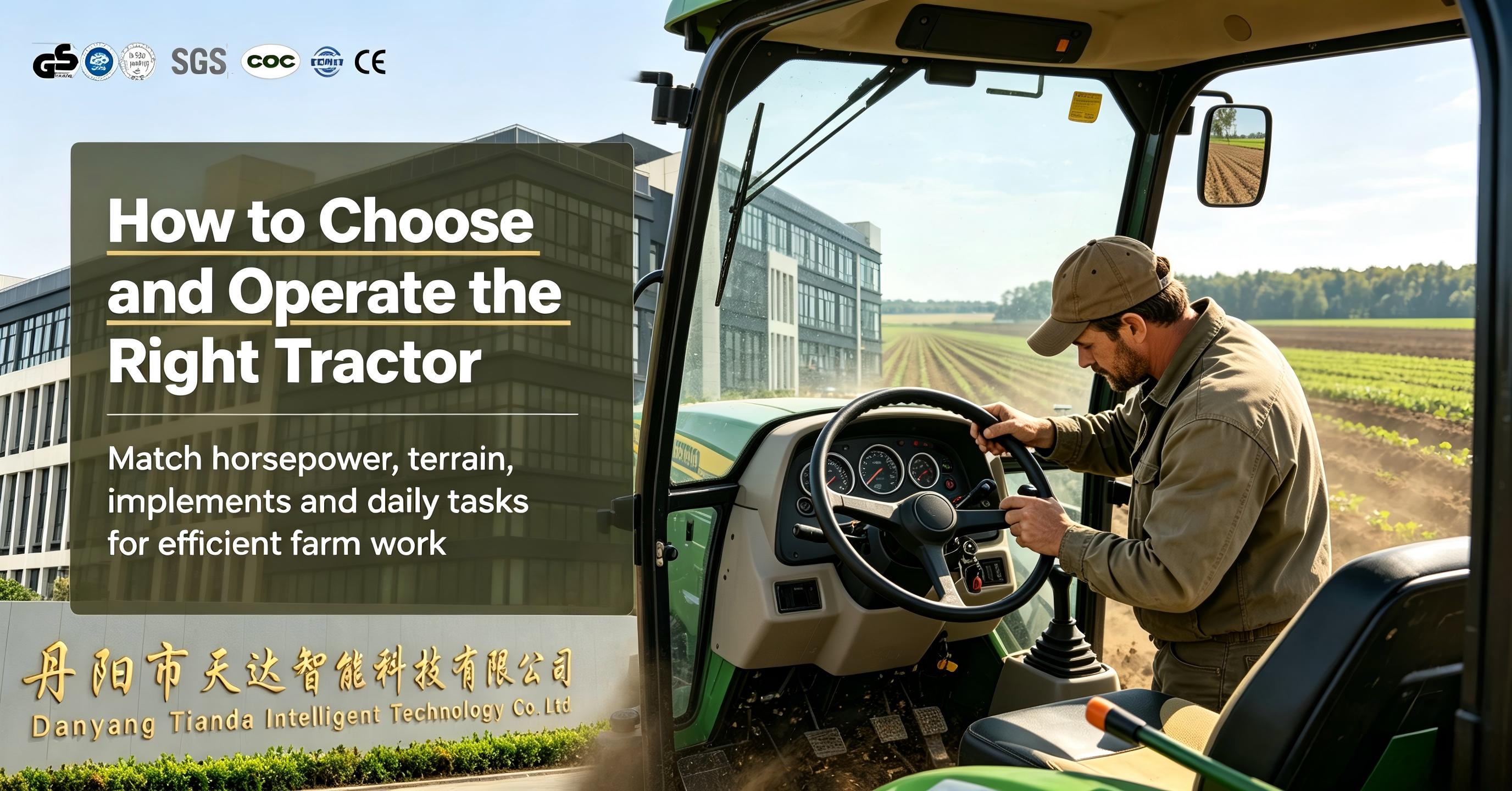
The best tractor starts with a written work profile. Record acreage, crops, terrain, soil condition, operating hours, transport distance, and seasonal deadlines. Then list every current and planned implement.
Use these checks before comparing quotations:
Power and traction: Match PTO horsepower to powered implements and drawbar capacity to pulled loads. Choose 4WD for frequent work on loose, wet, or sloped ground. Tire type, ballast, and differential lock also affect usable traction.
Connections and capacity: Confirm hitch category, PTO speed, hydraulic flow, remote valves, and lift capacity. Include the weight and leverage of mounted equipment. Check front and rear axle ratings after adding loaders or ballast.
Fit and productivity: Measure gates, crop rows, branch clearance, turning space, and storage height. Compare transmission choices against field speed and loader work. A shuttle gearbox can simplify frequent direction changes.
Ownership support: Ask for manuals, warranty terms, service response, spare-parts availability, and maintenance schedules. Confirm certification and emissions requirements in the destination market. Purchase price alone cannot predict working cost or downtime.
Request test data under conditions close to your own. Useful evidence includes fuel consumption, PTO output, lift curves, turning radius, axle capacities, and service intervals. A field demonstration can reveal visibility, control effort, and attachment problems before purchase.
A buyer reviewing Agrotianda can compare tractor configurations from roughly 25–260 HP, plus 4WD, cabin, gearbox, and three-point-hitch options. The useful choice still depends on verified implement demand and local field conditions.
Safety begins before the engine starts. Inspect tires, fluids, brakes, guards, steering, lights, hitch pins, and attachment locks. Keep riders off machines lacking an approved passenger seat.
Use a rollover protective structure and fastened seat belt together. Keep PTO shields installed, stop power before servicing, and never step across a rotating driveline. The agricultural tractor provides formal ROPS and seat-belt requirements for covered workplaces.
Local farming conditions affect far more than horsepower. Start with the ground under the machine. For wet paddy fields, soft soil, or regularly muddy land, prioritize 4WD, suitable agricultural-tread tires or tracks, and a chassis that provides flotation and ground clearance. For hilly or uneven areas, a stable wheelbase, appropriate ballast, dependable brakes, and tires with strong sidewall support help maintain traction and control. On dry, open farmland, tire width, tread pattern, and ballast should balance draft performance with low soil compaction. Narrow orchards and vineyards often need a compact width, low-profile chassis, and tires sized for turning space without damaging crops.
Country-specific needs also matter. Soil type, rainfall, crop rows, transport rules, emissions requirements, and common implements differ by market. Agrotianda provides configuration recommendations and customized solutions for different countries and terrain conditions, helping customers match tire type, chassis layout, traction options, and working attachments to their local applications. Confirm the final specification with the supplier against the actual field, crop, and implement requirements.
For example, Agrotianda’s custom solution for Chile addresses mountainous slopes, rocky roads, and narrow valley farmland with high-torque power, anti-slip wear-resistant tires, and a stable balance structure. For Chilean orchards and terraced fields, the solution also emphasizes a compact body and flexible turning radius to improve access and reduce crop damage. This shows why a regional tractor specification should consider terrain and crop layout together, not horsepower alone.
Power and traction: Match PTO horsepower to powered implements and drawbar capacity to pulled loads. Choose 4WD for frequent work on loose, wet, or sloped ground. Tire type, ballast, and differential lock also affect usable traction.
Connections and capacity: Confirm hitch category, PTO speed, hydraulic flow, remote valves, and lift capacity. Include the weight and leverage of mounted equipment. Check front and rear axle ratings after adding loaders or ballast.
Fit and productivity: Measure gates, crop rows, branch clearance, turning space, and storage height. Compare transmission choices against field speed and loader work. A shuttle gearbox can simplify frequent direction changes.
Ownership support: Ask for manuals, warranty terms, service response, spare-parts availability, and maintenance schedules. Confirm certification and emissions requirements in the destination market. Purchase price alone cannot predict working cost or downtime.
Request test data under conditions close to your own. Useful evidence includes fuel consumption, PTO output, lift curves, turning radius, axle capacities, and service intervals. A field demonstration can reveal visibility, control effort, and attachment problems before purchase.
A tractor is a mobile power source built for traction, control, and implement operation. Its value comes from matching type, power, size, and attachments to real work.
Define the job first. Then verify compatibility, safety, service, and ownership costs before choosing any tractor.
A: It means a low-speed machine designed to pull, carry, and power equipment.
A: Common types include utility, compact, row-crop, orchard, crawler, two-wheel, and industrial tractors.
A: It prepares soil, plants, sprays, mows, powers machinery, and transports materials.
A: No. Road tractors pull semi-trailers, while farm tractors operate agricultural implements.


