

Views: 0 Author: Site Editor Publish Time: 2026-08-13 Origin: Site
A cornfield enters a single modern machine. Clean kernels leave through an unloading auger minutes later.
That simple result depends on several systems working in a precise sequence. Each stage gathers, separates, cleans, or moves the crop.
So, how does a corn harvester work in modern farming? This guide follows the complete crop path. It also explains adjustments, losses, sensors, and residue handling.
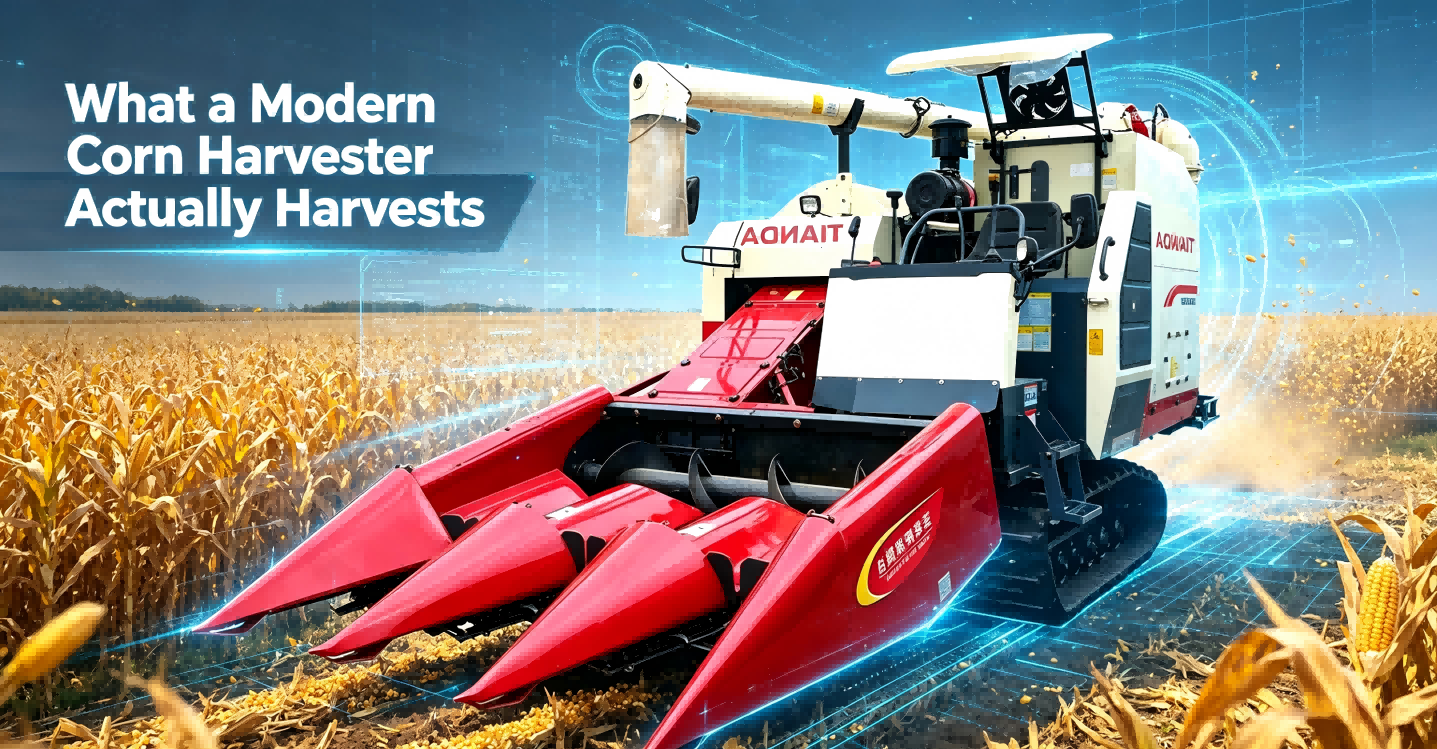
“Corn harvester” can describe different machines, so the intended output matters first. A grain combine removes kernels and cleans them for storage. An ear-corn harvester collects whole ears, sometimes after peeling their husks. A forage harvester chops nearly the entire plant for silage.
These machines cannot be judged by the same process or performance measures. Grain buyers care about clean kernels, low breakage, and limited field loss. Ear-corn operations examine picking and peeling quality. Silage producers focus on chop length, kernel processing, moisture, and feed value.
Machine type | Material entering the main process | Product collected | Common purpose |
Grain combine plus corn head | Mostly ears and limited residue | Shelled, cleaned kernels | Dry grain or later drying |
Ear-corn harvester | Ears, husks, and some residue | Whole or partly peeled ears | Seed, food, or later shelling |
Forage harvester | Most of the corn plant | Chopped plant material | Silage production |
This article mainly follows a combine fitted with a specialized corn head. It gathers rows, removes ears, shells kernels, separates material, cleans grain, and stores it onboard. The combine performs these jobs during one field pass.
The Agrotianda includes crawler and wheel configurations. Its listed multi-crop combines can use matched headers for corn and other grains. That detail matters because changing crops requires more than driving into another field. The correct header, internal setup, and operating adjustments must work together.
Power moves the crop, but controlled flow creates quality. Every section must accept material at roughly the rate delivered by the section before it. Excessive travel speed can overload the header, feeder, threshing system, and cleaning shoe. Smooth feeding often produces more usable grain per hour than short bursts of higher speed.
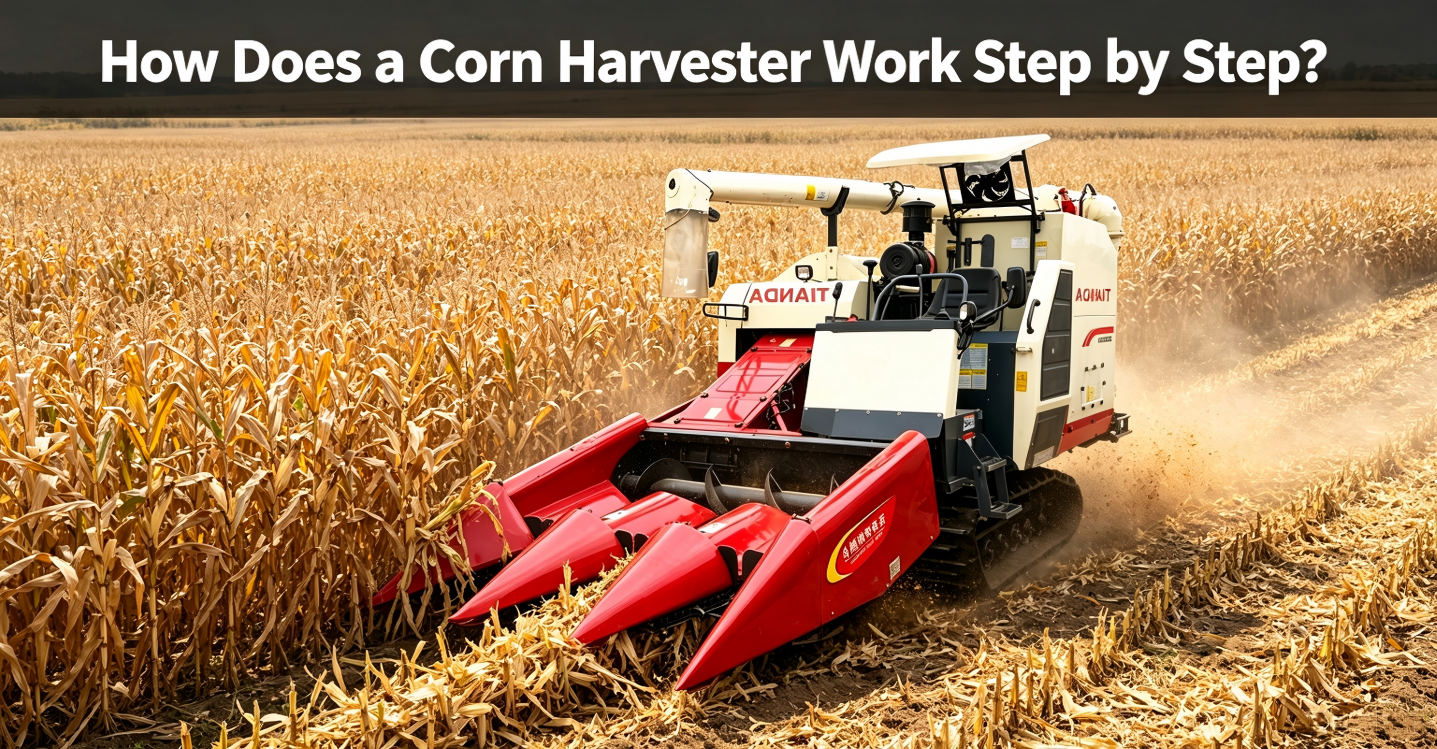
Pointed row dividers travel between planted rows and guide stalks into individual row units. Gathering chains then control their movement. Beneath those chains, counter-rotating snap rolls grip each stalk and pull it downward.
Deck plates form a narrow opening above the rolls. The stalk passes through, but the larger ear cannot. It snaps free and remains above the plates. Gathering chains carry the ears toward a cross auger, which directs them into the feeder house.
Correct row alignment is essential here. Poor alignment can push stalks aside or drop ears before collection. Deck plates also need a suitable gap. An opening that is too wide may lose small ears or loose kernels. An overly tight opening admits extra stalk material and may restrict feeding.
The feeder house delivers a steady crop mat into the combine body. Inside, a rotor or cylinder moves the ears against a curved grate called the concave. Controlled rubbing and impact detach kernels from the cobs.
Loose kernels fall through openings in the concave. Larger cobs and husks continue through the separation area. The machine must remove remaining kernels before those materials leave the rear. Rotor speed, concave clearance, crop moisture, and feed rate shape this result.
After threshing, kernels remain mixed among broken cob, husks, and light chaff. Shaking sieves sort this mixture by size. A cleaning fan pushes air through it, carrying lighter material away while heavier kernels fall through.
Elevators and augers move clean corn into the grain tank. When needed, the unloading auger transfers it into a grain cart or truck. Many farms unload while harvesting, reducing stops during short weather windows.
Meanwhile, cobs, husks, and stalk material leave through the rear or header area. Choppers and spreaders may size and distribute this residue across the harvested width.
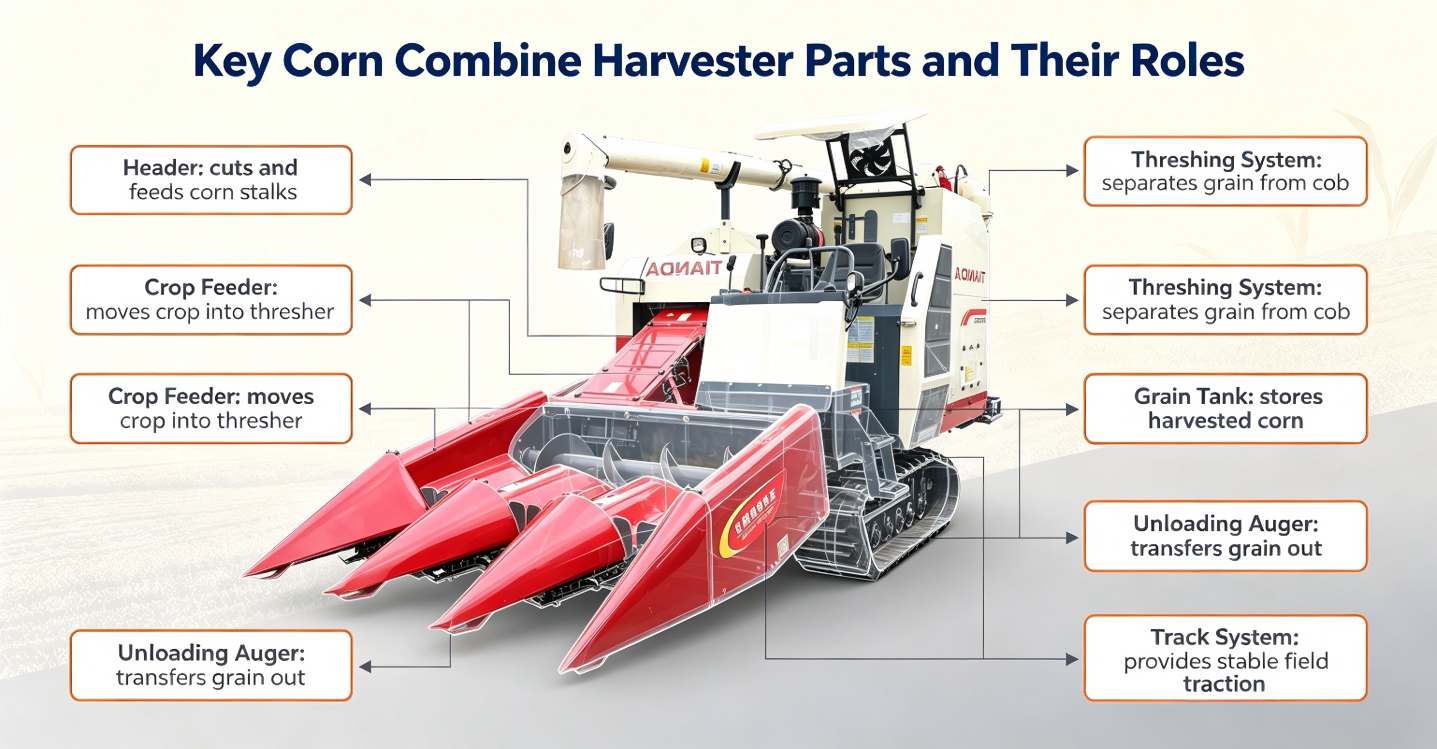
The corn header determines what enters the combine. Row dividers lift and separate plants. Gathering chains keep ears moving, while snap rolls pull stalks downward. Deck plates retain the ears, and the cross auger moves them toward the center.
Wear gradually changes how this process works. Rounded snap-roll edges may lose their grip. Loose gathering chains can create uneven flow. Bent dividers may miss lodged stalks. Operators should inspect these parts before losses become visible from the cab.
The feeder house, rotor or cylinder, concave, separator, fan, and sieves form the processing line. Each component changes the crop without stopping its movement. Their combined settings determine threshing completeness, kernel damage, grain cleanliness, and throughput.
Component | Main job | Performance clue |
Row dividers and gathering chains | Align stalks and move ears | Missed plants or uneven feeding |
Snap rolls and deck plates | Pull stalks down and retain ears | Whole-ear or loose-kernel loss |
Feeder house | Supply an even crop mat | Surging, plugging, or high power demand |
Rotor or cylinder and concave | Remove kernels from cobs | Cracks or kernels remaining on cobs |
Separator, sieves, and fan | Recover and clean loose grain | Dirty tank sample or rear loss |
Grain elevator, tank, and auger | Store and transfer clean grain | Slow handling or damaged kernels |
Chopper and spreader | Size and distribute residue | Strips, piles, or long stalk pieces |
Agrotianda presents low-loss harvesting, field adaptability, maintainability, parts availability, and technical support as key harvester priorities. Buyers can turn those claims into practical checks. They should inspect adjustment access, wear-part supply, cleaning points, manuals, training, and local service arrangements.
The engine and transmission support every crop-handling system. However, horsepower alone does not guarantee capacity. Header width, crop yield, moisture, terrain, unloading logistics, and internal processing limits must remain balanced.
Start from the operator manual, then adjust for the actual field. No universal rotor speed or sieve opening fits every combine. Corn moisture, cob size, stalk strength, yield, slope, and lodging can change within one day.
Ground speed controls how much material enters each minute. Header height affects missed ears, soil intake, and residue flow. Rotor speed and concave clearance control shelling force. Fan speed and sieve openings balance clean grain against kernels leaving the rear.
Verifying Combine Adjustments During Crop Harvest notes that header loss may form a large share of total corn loss. Rear loss monitors cannot measure every ear or kernel lost at the front. Regular field checks therefore remain necessary.
Observation | Likely area | Practical response |
Whole ears before or under the header | Alignment, speed, chains, or deck plates | Slow down and inspect the row units |
Loose kernels around the header | Ear impact or dry-corn shelling | Adjust header speed and plate spacing |
Kernels still attached to cobs | Threshing is too gentle | Change rotor speed or concave clearance gradually |
Cracked kernels in the tank | Threshing or handling is too aggressive | Reduce impact and check sharp auger edges |
Dirty grain sample | Airflow or sieves need correction | Adjust one setting, then inspect another sample |
Clean kernels behind the combine | Separation or cleaning loss | Review load, fan, sieve, and separator settings |
Combine-adjustment guidance also recommends beginning with manufacturer settings and adapting them to crop conditions. Change one variable at a time. Harvest a representative distance, stop safely, then inspect the ground, cobs, residue, and tank sample.
Never clear a blockage while components can move. Lower attachments, stop the engine, isolate power, and follow the machine’s safety procedure. Dust and dry residue also collect near hot surfaces, so routine cleaning reduces fire risk.
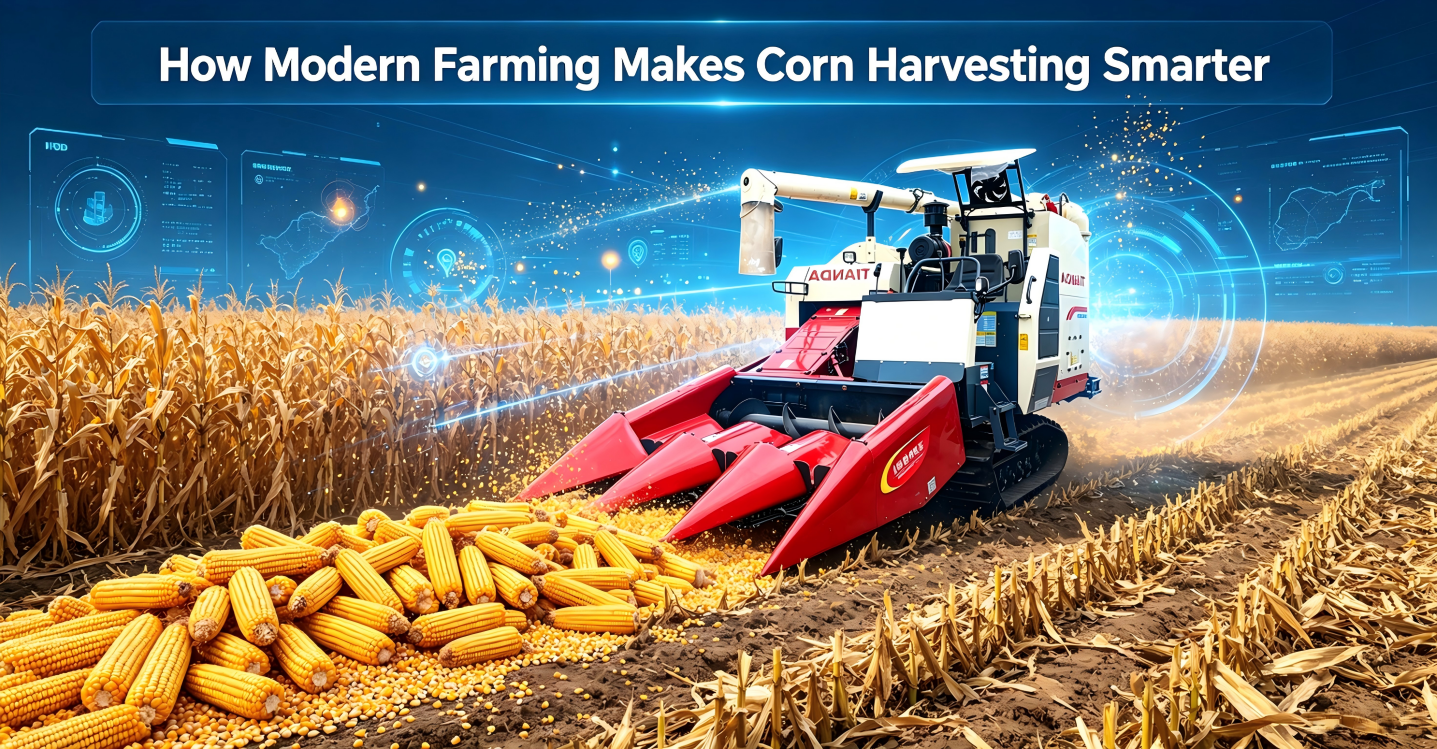
Modern combines may use automatic header-height control, row guidance, yield monitors, moisture sensors, loss sensors, cameras, and GPS steering. These tools reduce operator workload and record field variation. Some machines also adjust selected settings automatically as crop load changes.
Yield maps show where harvested output changed across the field. Moisture records help plan drying and storage. Telematics may share location, fuel use, machine alerts, and progress with farm managers. However, a sensor reading cannot replace a safe ground check when losses rise.
A well-adjusted chopper and spreader distribute material across the full header width. Even residue can protect soil and simplify later tillage or planting. Farms that bale stover need a different discharge plan, since excessive chopping may reduce recoverable material.
Harvest capacity also depends on what happens after the grain tank fills. Grain carts, trucks, dryers, labor, field entrances, and storage must match combine output. A fast machine still waits when transport or unloading becomes the bottleneck.
The Agrotianda states more than 20 years of agricultural-equipment experience and service across over 50 countries. It also describes full-cycle machinery covering harvesting and grain drying. Buyers should still turn broad capability into a field-specific quotation.
Give the supplier a clear operating profile:
Crop output required: shelled grain, whole ears, or chopped silage.
Farm size, target hectares per day, yield, and harvest window.
Row count, exact row spacing, terrain, soil, and road width.
Typical grain moisture, stalk condition, and lodging risk.
Preferred wheel or crawler chassis and transport limits.
Residue plan, unloading method, dryer capacity, and storage flow.
Required manuals, training, warranty, spare parts, and service response.
This information connects the corn harvester working principle to buying decisions. It helps both parties select a complete system instead of comparing horsepower alone.
A modern corn combine controls one continuous crop path. It gathers stalks, removes ears, shells kernels, cleans grain, and manages residue.
Correct settings matter as much as strong hardware. Match the header, crop conditions, field speed, and logistics to protect yield and grain quality.
A: A grain combine usually pulls stalks downward and collects ears. A forage harvester chops most of the plant.
A: A corn picker normally collects whole ears. A combine shells, cleans, stores, and unloads kernels during one pass.
A: Yes, many modern combines can harvest other crops. They need the correct header, internal parts, and crop-specific settings.
A: Causes include header loss, poor threshing, excessive airflow, overloading, worn parts, or unsuitable settings.
A: They usually remain as residue. The machine may chop and spread them, or prepare them for later collection.


