

Views: 0 Author: Site Editor Publish Time: 2026-08-21 Origin: Site
India is one of the world's largest rice-producing countries, and paddy harvesting plays an important role in agricultural productivity. However, many rice-growing regions face challenges during harvesting seasons, especially in areas with wet soil, heavy rainfall, and muddy fields.
Traditional wheeled combine harvesters may experience difficulties in soft paddy fields due to poor traction and higher ground pressure. This is why more farmers and agricultural contractors are looking at crawler combine harvesters as an efficient solution for modern rice harvesting.
A crawler combine harvester uses rubber tracks instead of traditional wheels, allowing the machine to operate more smoothly in challenging field conditions. For Indian paddy farming, this design provides better stability, lower soil pressure, and more reliable harvesting performance.
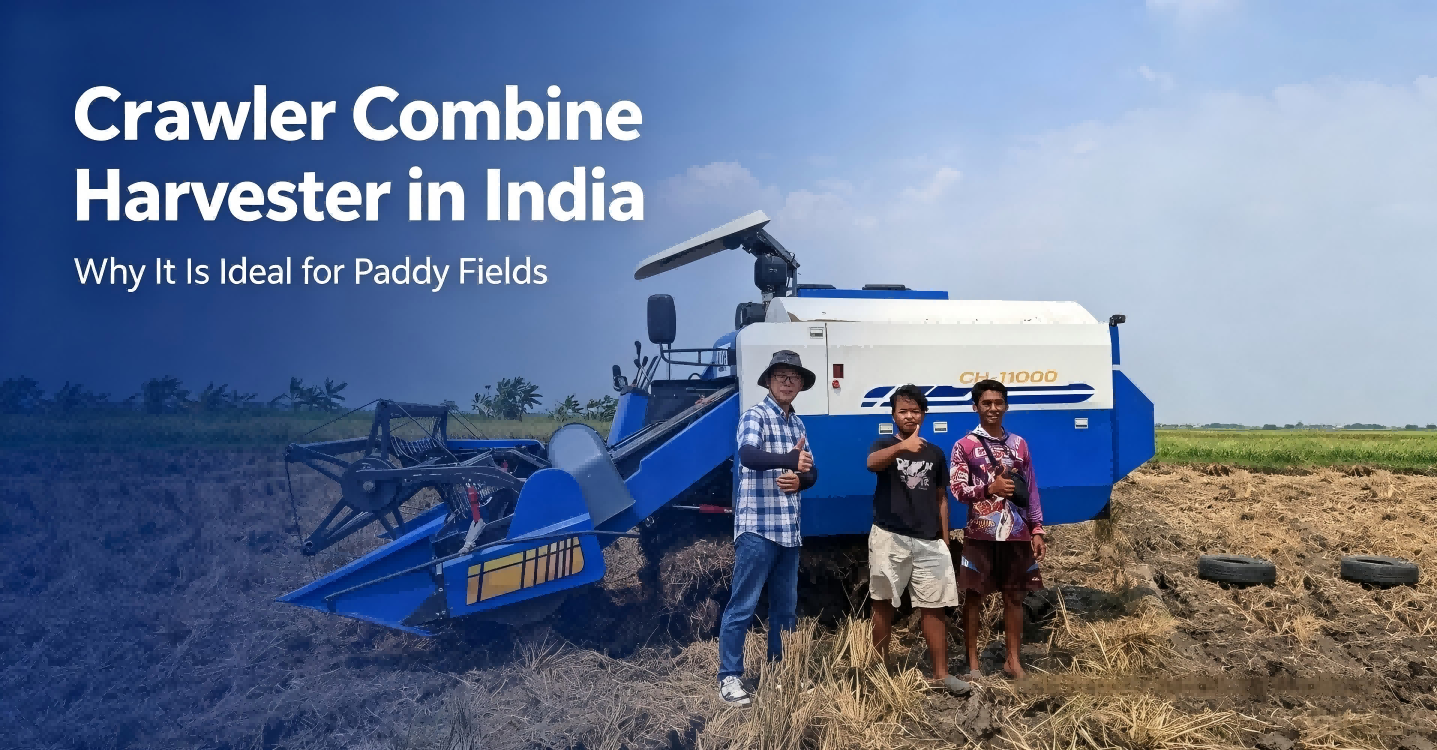
A crawler combine harvester is a self-propelled harvesting machine equipped with track systems instead of wheels. It combines several operations, including crop cutting, threshing, separation, and grain cleaning, into one continuous process.
Compared with conventional harvesting equipment, crawler-type combines are specially designed for wet and soft farmland. The wide track system distributes the machine weight over a larger area, helping prevent sinking and reducing damage to the field surface.
For rice farmers in regions where water retention and muddy soil are common, a crawler combine harvester can provide more stable operation during the short harvesting window.
Many Indian rice-growing areas experience wet field conditions after monsoon seasons. When the soil becomes soft, wheeled harvesters may lose traction or leave deep tracks in the field.
Crawler combine harvesters solve this problem through low-ground-pressure track systems. The larger contact area improves grip and allows the machine to move smoothly across muddy paddy fields, helping farmers complete harvesting work on time.
This advantage is especially important because delays during rice harvesting can increase crop losses and reduce grain quality.
Paddy fields are often uneven, and maintaining stable machine operation is essential for harvesting efficiency. A crawler system provides better balance compared with standard wheel systems, especially when working on soft or uneven farmland.
Stable movement helps maintain consistent cutting height and reduces unnecessary crop losses during harvesting. For professional farming contractors and agricultural service providers, this means more reliable operation across different field conditions.
Heavy agricultural machinery can create soil compaction problems, affecting future crop growth. Because crawler tracks distribute the machine weight more evenly, crawler combine harvesters create lower pressure on the soil surface.
This makes them a practical choice for rice fields where maintaining soil conditions is important for future planting seasons.
Labor shortages are becoming a major challenge in many agricultural regions. Traditional manual harvesting requires significant manpower and additional time for threshing and cleaning.
A combine harvester completes cutting, threshing, separating, and cleaning in a single operation, significantly improving harvesting efficiency. This allows farmers and agricultural contractors to cover more acres during the limited harvesting period.
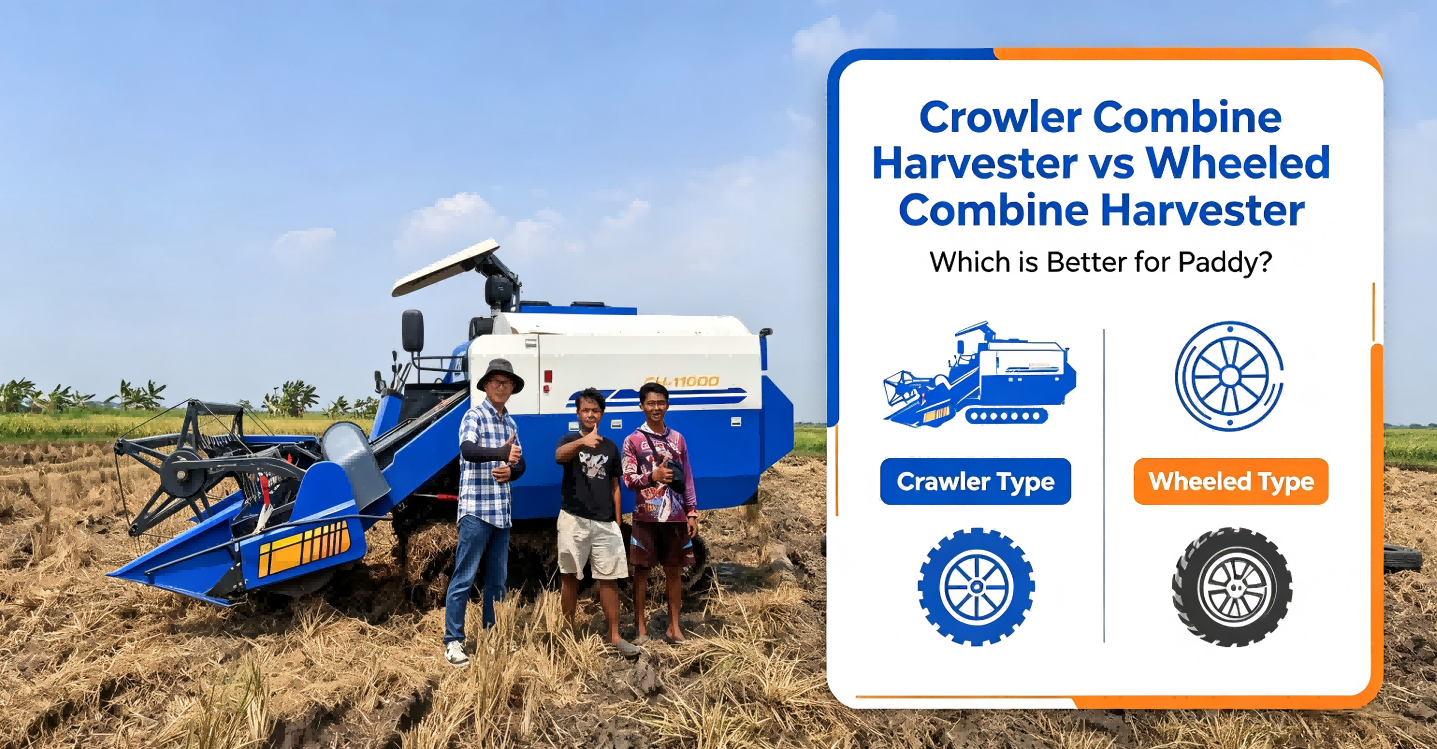
Both wheeled and crawler combine harvesters have their own advantages. Wheeled models are suitable for dry fields and general agricultural conditions, while crawler models are designed for more demanding environments.
For Indian rice cultivation, especially in areas with wet soil, paddy fields, and monsoon influence, crawler combine harvesters often provide better mobility and stability.
Farmers should consider field conditions, crop type, working area, and maintenance support before choosing the right harvesting machine.
Engine power directly affects harvesting performance. A suitable engine provides enough power for cutting, threshing, and grain processing while maintaining fuel efficiency.
For medium and large-scale rice harvesting operations, machines with around 100HP or higher are commonly preferred because they can handle longer working hours and higher crop volume.
The track system is one of the most important components of a crawler combine harvester. A high-quality crawler system should provide strong traction, durability, and smooth operation in wet conditions.
The design of the tracks directly influences machine stability, turning performance, and field adaptability.
Rice harvesting requires efficient threshing and cleaning systems to reduce grain loss and improve grain quality.
A well-designed combine harvester should separate grain effectively while minimizing broken grains and unnecessary losses during operation.
For farmers and dealers, long-term machine reliability is as important as initial performance. Easy maintenance, available spare parts, and technical support help reduce downtime during busy harvesting seasons.
Agro-Tianda crawler combine harvesters are developed for demanding agricultural environments, including wet paddy fields and large-scale harvesting operations.
With powerful diesel engines, reliable crawler systems, and efficient harvesting functions, Agro-Tianda machines provide a practical solution for Indian farmers and agricultural contractors looking for stable performance and long service life.
Our crawler combine harvesters are suitable for rice harvesting while also offering flexibility for different crop conditions. With professional manufacturing experience and export support, Agro-Tianda provides complete agricultural machinery solutions for global markets.
The demand for efficient harvesting equipment continues to grow in India as farmers look for ways to reduce labor costs and improve productivity.
For paddy fields with wet soil and challenging terrain, a crawler combine harvester offers clear advantages in stability, mobility, and harvesting efficiency.
Choosing the right machine based on field conditions and crop requirements can help farmers achieve faster harvesting, lower operating costs, and better long-term returns.


