

Views: 0 Author: Site Editor Publish Time: 2026-06-08 Origin: Site
When you think of a farm, the first image that probably pops into your mind is a tractor rolling across a field. Tractors are the undisputed heavyweights of agriculture, but to the untrained eye, they can look a little strange.
Why are the wheels mismatched? Why do they sound so loud? If you’ve ever looked at a tractor and wondered what’s actually going on under the hood, you’re not alone. Millions of people ask Google these exact questions every year.
Let’s unlock the secret engineering that makes the modern tractor the ultimate farming machine!
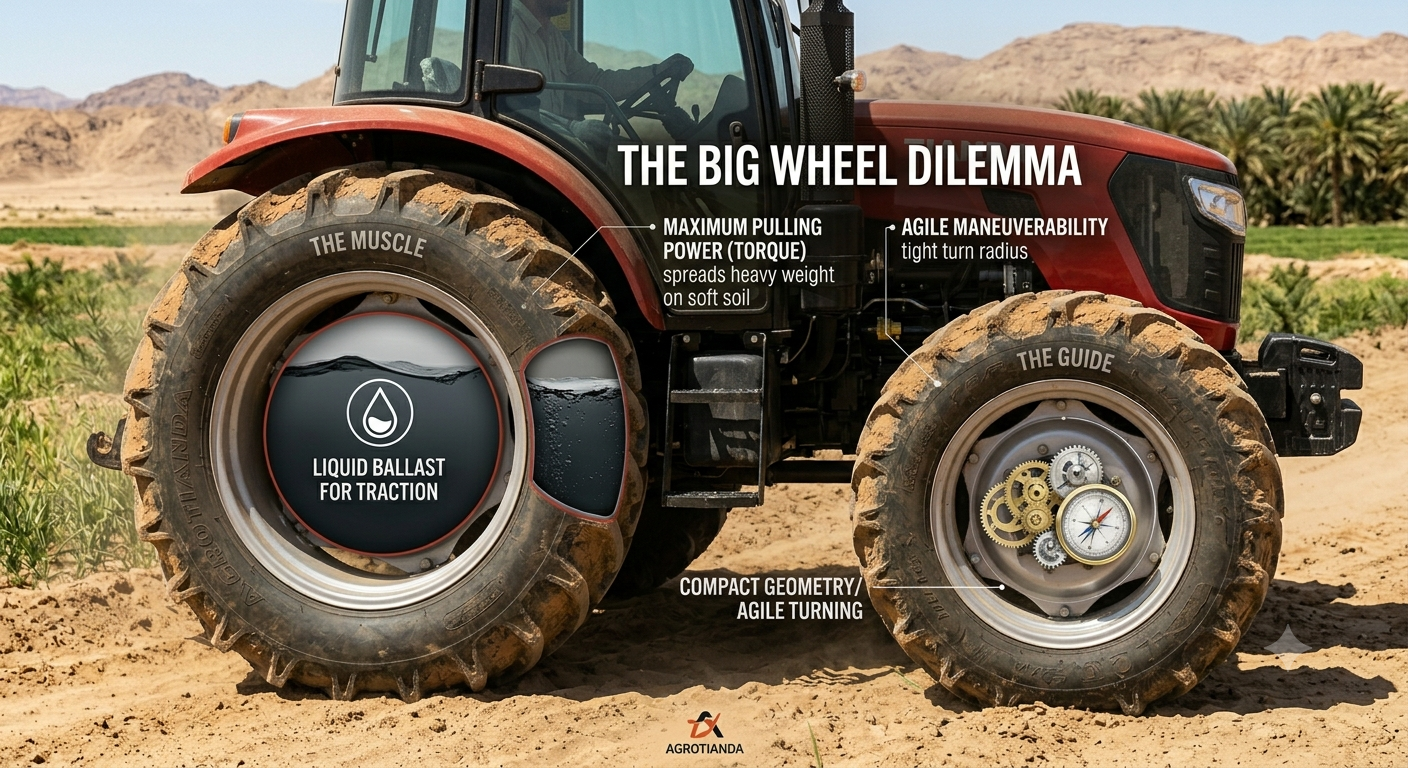
It’s the most common question of all: Why does a tractor look like a mechanical monster with giant back wheels and miniature front ones? This isn’t a styling choice—it’s pure physics.
The Big Rear Wheels (The Muscle): Tractors are built for torque (pulling power), not speed. To pull heavy plows through tough, sticky clay or loose sand, they need immense grip. The massive surface area of the rear tires provides maximum contact with the ground, preventing the wheels from spinning uselessly. Furthermore, spreading the tractor's multi-ton weight across giant tires prevents the machine from sinking into mud and crushing the delicate crop roots below.
The Small Front Wheels (The Guide): While the back tires do the heavy lifting, the front tires handle the steering. Smaller wheels can pivot at much sharper angles. This allows a massive tractor to make tight, clean U-turns at the end of a crop row, maximizing field space. They are also lighter, making steering effortless for the operator.
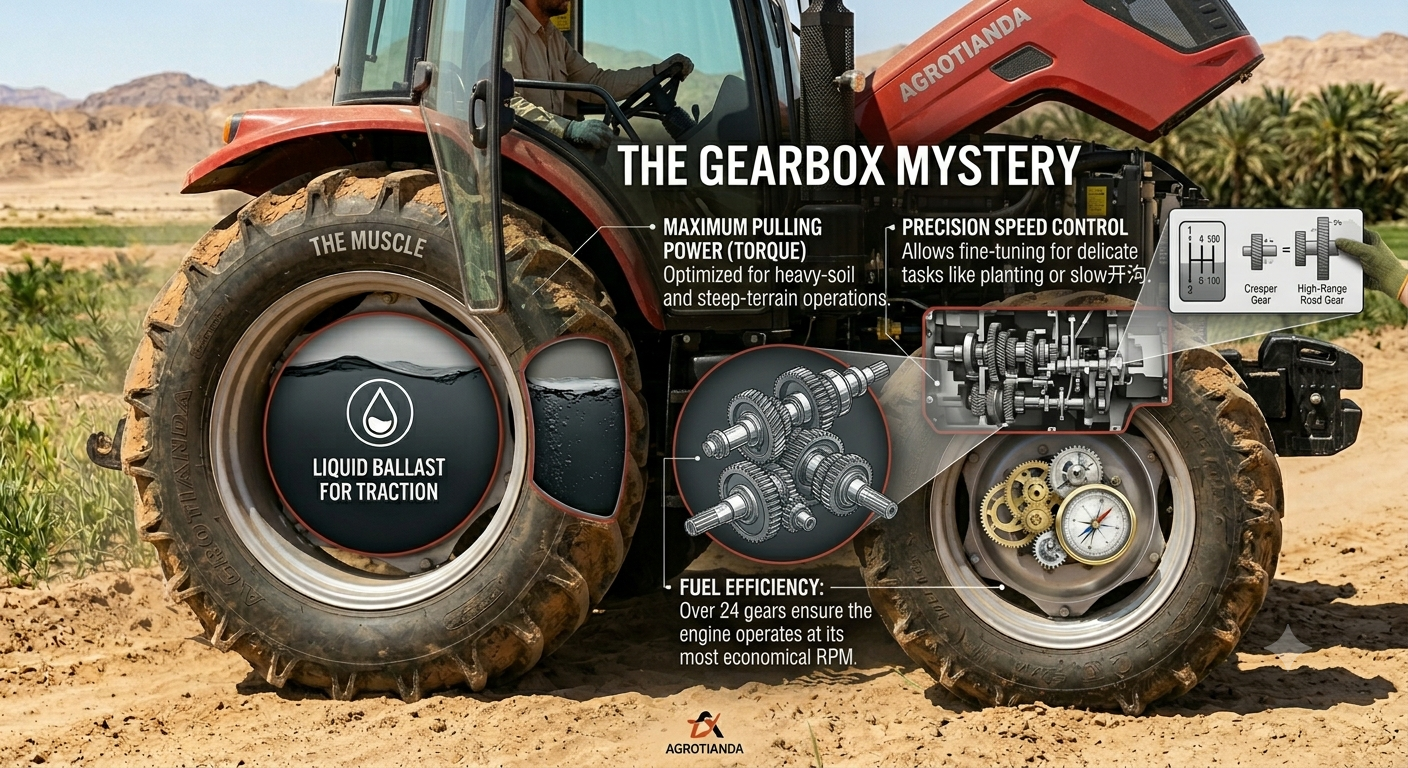
If you drive a standard car, you’re probably used to 5 or 6 gears. But if you hop into a heavy-duty modern tractor, you might find a transmission with 24 forward gears and 24 reverse gears! Why on earth does a slow vehicle need so many options?
It all comes down to precision speed and engine efficiency. Different farming jobs require exact, unchanging speeds:
Deep plowing might require a steady 6 km/h.
Planting delicate seeds might require exactly 3.2 km/h.
Digging trenches can require a "creeper gear" that moves slower than a snail (less than 1 km/h).
Having dozens of gears allows the engine to run at its absolute sweet spot—delivering maximum pulling power while burning the least amount of fuel—no matter how fast or slow the tractor needs to move.
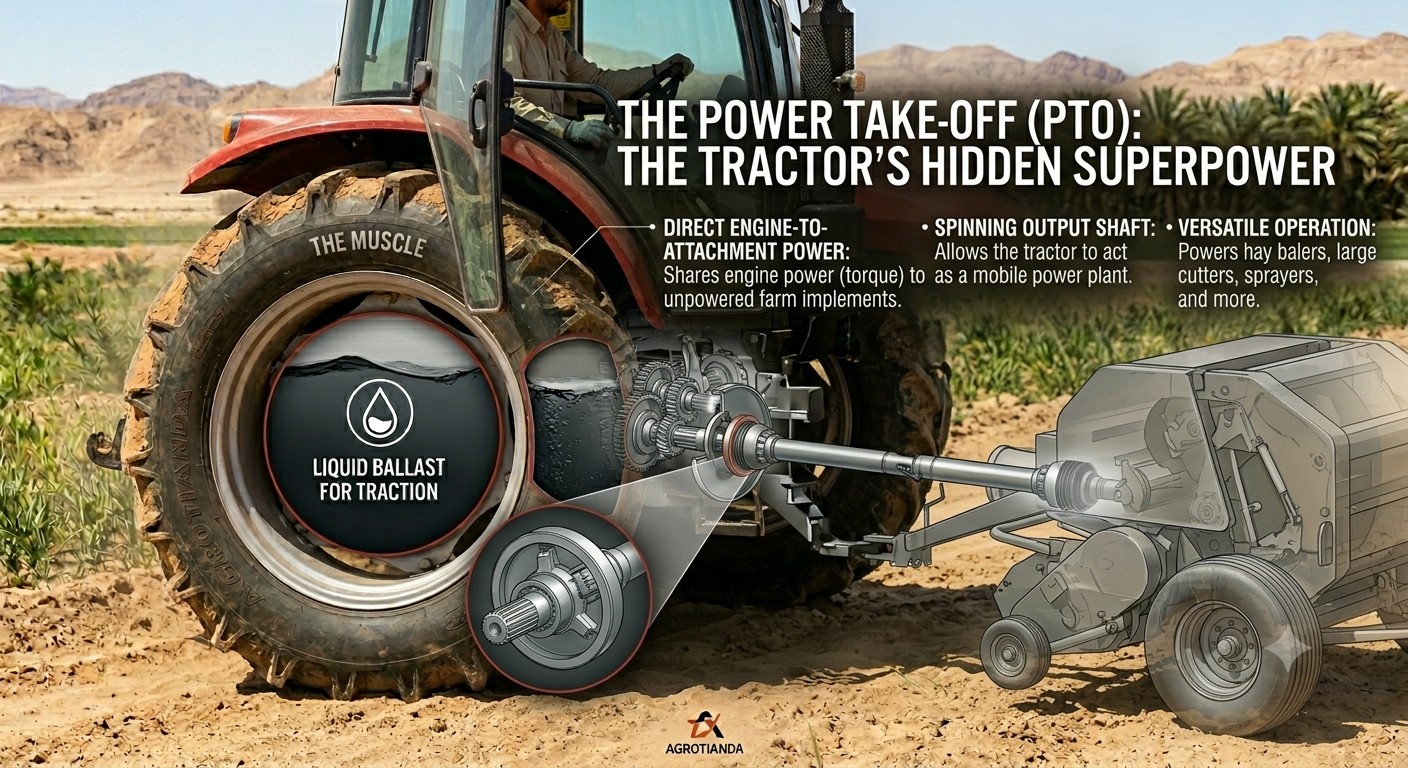
Have you ever wondered how a tractor powers the massive machines it pulls, like hay balers, large grass cutters, or grain carts? Those implements don't have engines of their own. Instead, they "steal" power directly from the tractor using a feature called the PTO (Power Take-Off).
If you look at the back of a tractor, you’ll see a stubby, spinning metal shaft. When a farmer hooks up an implement, they connect a heavy-duty drive shaft from the implement to this spinning PTO stub.
Think of the tractor as a giant, mobile power outlet, and the farm tools as appliances. The PTO allows the tractor’s massive diesel engine to simultaneously drive the vehicle forward and power complex machinery in the back.
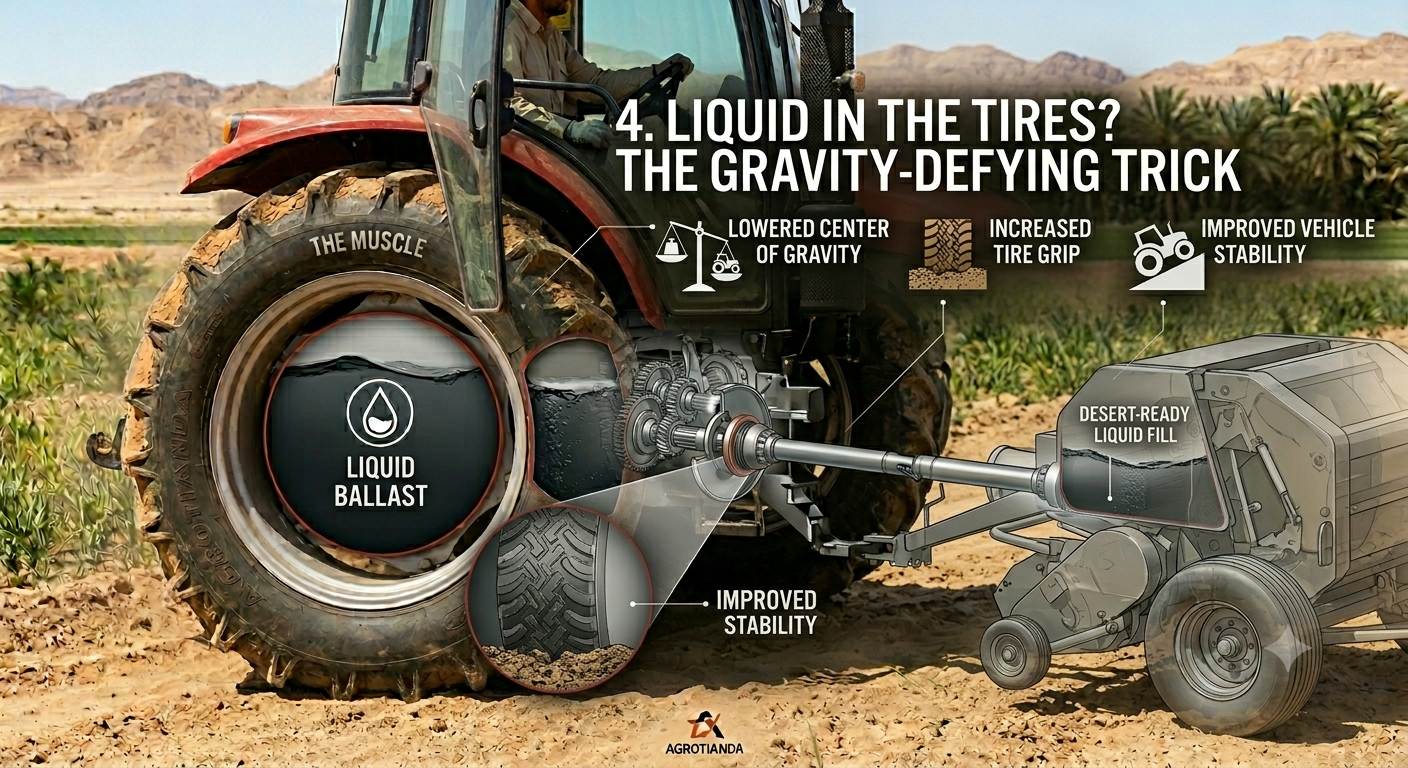
Here is a fact that defies normal automotive logic: Farmers regularly fill their tractor tires with liquid instead of air. In fact, they often fill them up to 75% full with water, calcium chloride solutions (so it doesn’t freeze), or even heavy beet juice!
Why would anyone want to make a vehicle heavier on purpose? It’s all about counter-weight and traction.
When a tractor lifts a heavy load with a front-end loader attachment, the weight can cause the rear wheels to lift off the ground, causing the tractor to lose grip or tip over. By filling the giant rear tires with heavy liquid, the tractor’s center of gravity is lowered drastically, pinning the machine firmly to the ground and providing maximum stability during heavy lifting.
Tractors may look slow and bulky, but they are among the most brilliantly engineered vehicles on the planet. Every mismatch wheel, every extra gear, and even the liquid hidden inside the tires serves a vital purpose: ensuring that fields are planted, harvests are gathered, and grocery store shelves remain full.


