


Views: 0 Author: Site Editor Publish Time: 2026-05-09 Origin: Site


Tractors are indispensable main equipment in agricultural production, widely used for tilling, sowing, fertilizing, and field management. As the component of agricultural machinery that directly contacts the soil, tires' parameters not only determine operating efficiency, fuel consumption, and traction, but also directly alter soil compaction, permeability, and water retention capacity.
Improper tire configuration can easily lead to soil compaction and hardening, hindering crop root growth and reducing soil fertility and grain yield in the long run. This article, based on field research, clearly explains the actual impact of three core parameters—tread pattern, tire pressure, and tire size—on the soil, while also providing scientifically sound matching solutions applicable to farms worldwide.
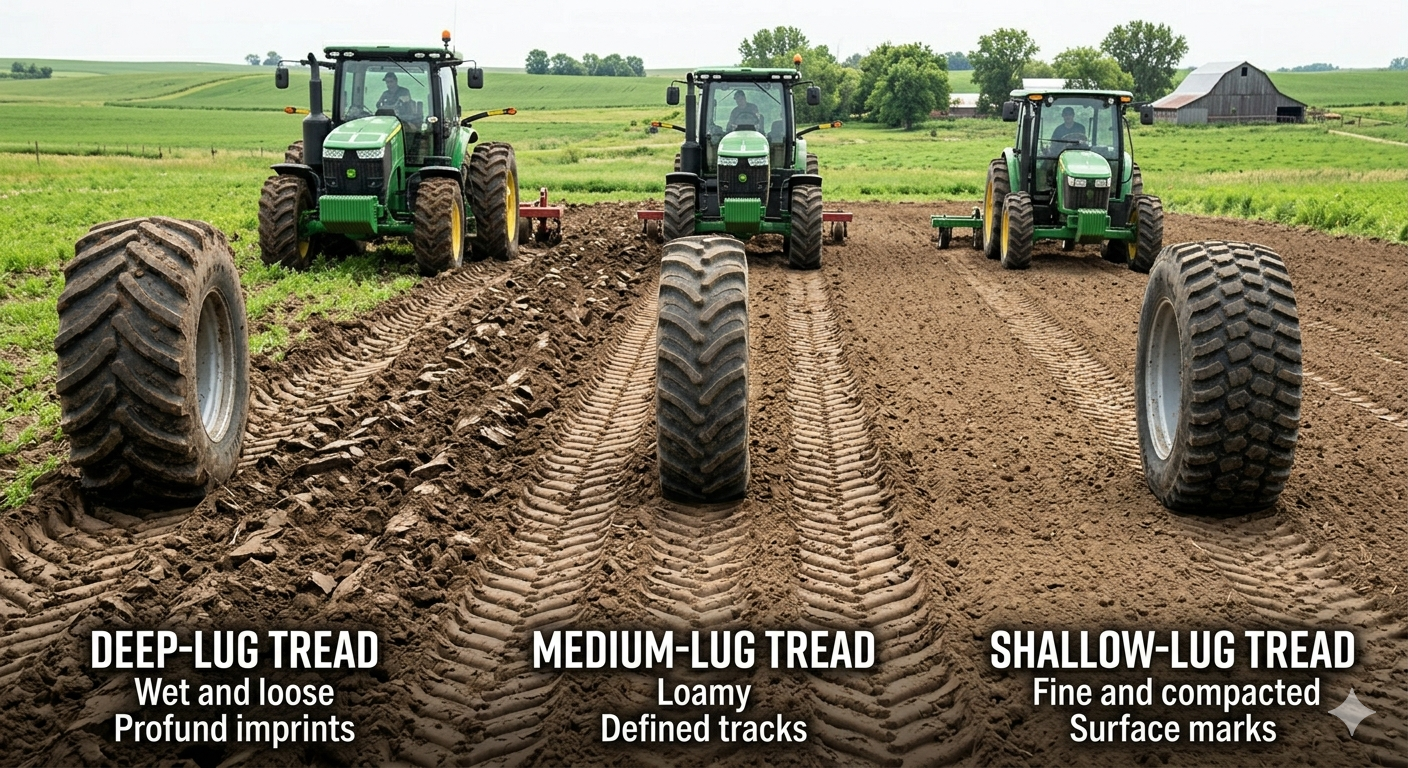
Different types of tread pattern designs have varying degrees of impact on the soil. Generally, tread patterns can be divided into three types: deep tread, medium tread, and shallow tread.
Tires with deep tread designs typically have better grip and traction, suitable for muddy or uneven terrain. Tires with Medium Tread Patterns:These tires offer good grip in wet soil conditions but can also cause excessive soil compaction, increasing soil density and reducing soil permeability and water penetration.
Tires with medium tread patterns balance grip and soil compaction, making them suitable for various terrains and providing stable traction in different soil conditions. However, they have relatively low soil compaction, which helps maintain soil permeability and water penetration.
These tires reduce soil compaction and are suitable for dry or harder soils. In dry soil conditions, they reduce soil compaction and protect soil structure, but may lack sufficient grip in wet or muddy soil conditions.
The impact of different tread pattern designs on the soil of agricultural tractor tires depends on soil moisture and texture. Choosing the right tread pattern design can minimize adverse effects on the soil and improve agricultural machinery efficiency and soil utilization.
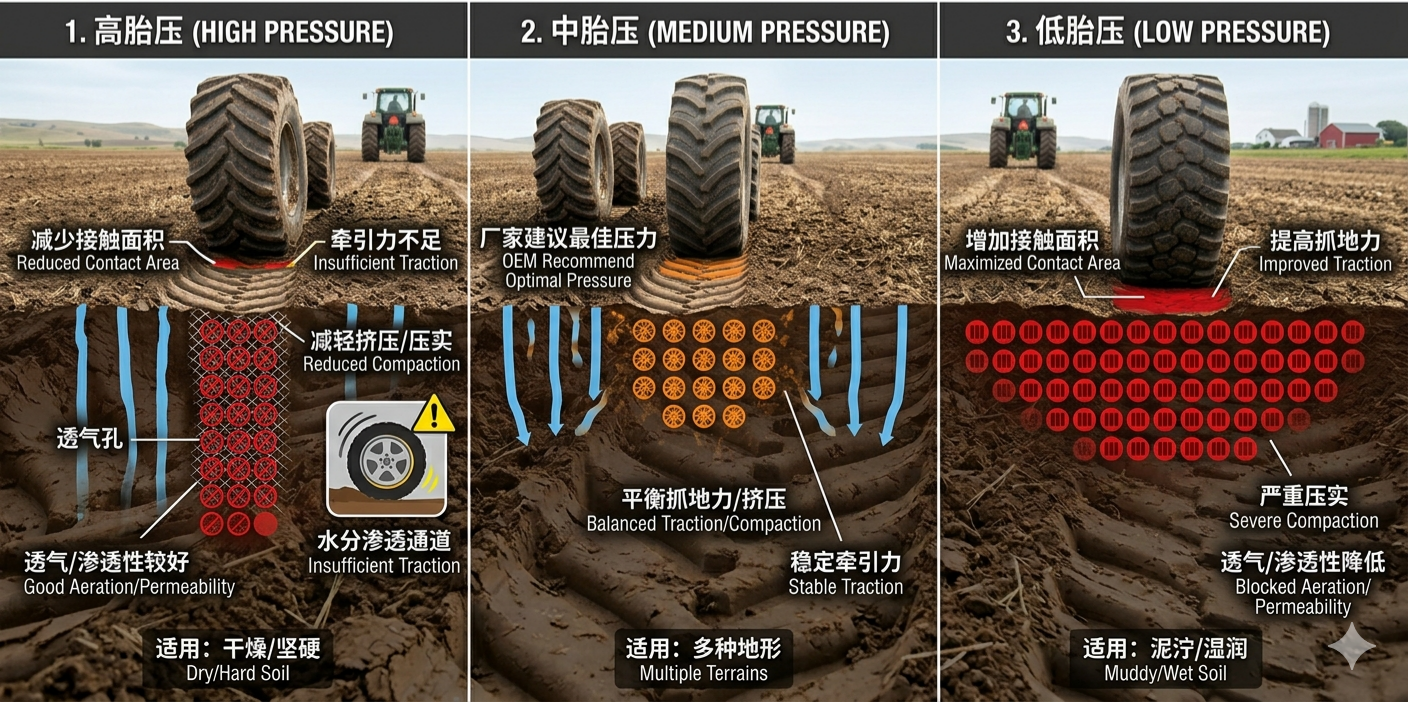
Tire pressure is one of the important parameters of agricultural tractor tires. Different tire pressures will affect soil compression, compaction, soil permeability, and water permeability.
High tire pressure can reduce the contact area between the tire and the soil, reduce the pressure per unit area, and to a certain extent reduce the compression and compaction of the soil. It is suitable for dry or hard soil and can protect the soil structure, but it may also reduce the tire's grip, resulting in insufficient traction.
Medium tire pressure is usually the optimal pressure recommended by the manufacturer. It can balance grip and soil compression, is suitable for various terrains and soil conditions, and can maintain stable traction and low soil compression.
Low tire pressure increases the contact area between the tire and the soil, making it suitable for muddy or wet soil conditions. It can improve the tire's grip and traction, but it will increase the soil compaction and reduce the soil's permeability and water permeability.
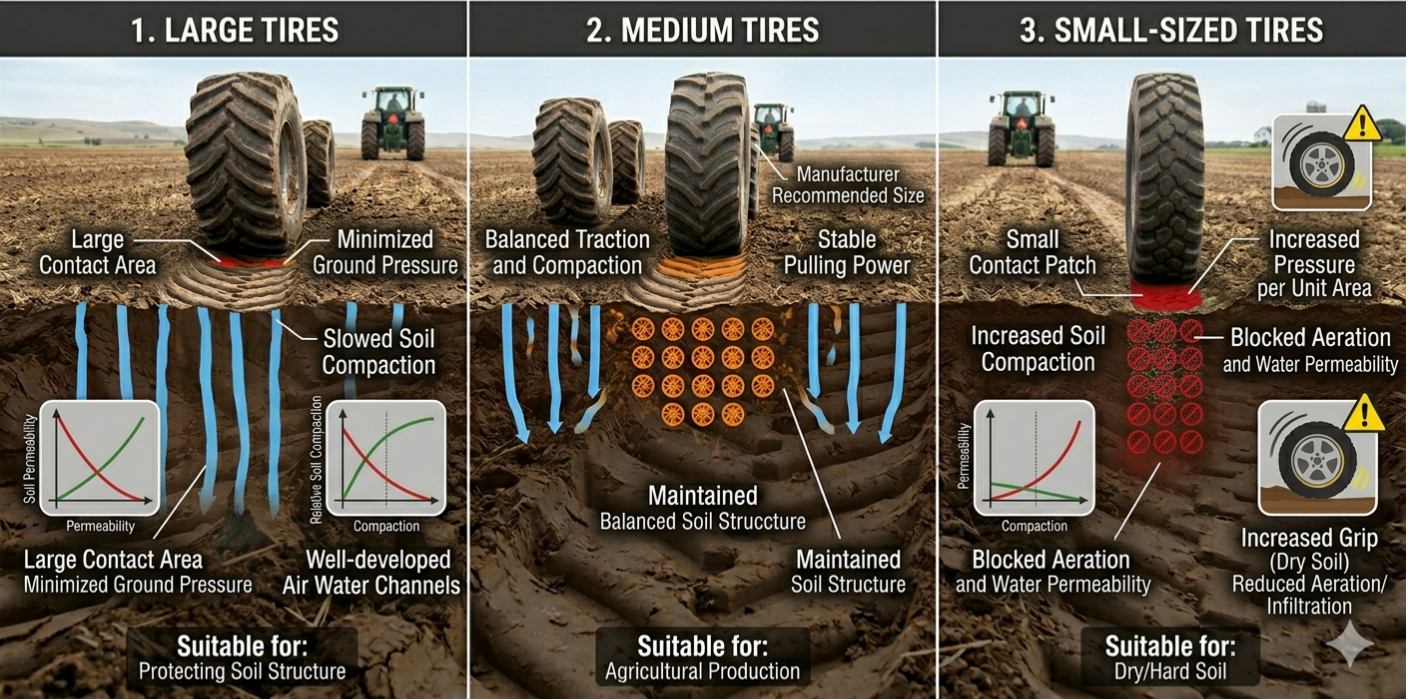
Large tires usually have a larger contact area, which can reduce the pressure per unit area and, to some extent, slow down the degree of soil compaction. They are suitable for terrains that require protection of soil structure, reducing soil compression and compaction, and improving soil permeability and water permeability.
Medium tire size can balance traction and soil compression[7], maintaining relatively stable traction and moderate soil compression in agricultural production.
Small-sized tires have a smaller contact patch, increasing pressure per unit area and leading to increased soil compaction. This size is suitable for dry or hard soil conditions, improving grip and traction, but may increase soil compaction and reduce soil aeration and water permeability.
After multiple sets of field comparison tests, the optimal combination was obtained, which can ensure the efficiency of operation and minimize soil damage: Medium tread agricultural tires are selected, with a working tire pressure of 435psi and a standard size tire with a diameter of 1.2 meters. This combination can effectively reduce the damage to the soil layer caused by agricultural machinery operation, maintain good soil permeability and water storage capacity, protect the land ecology, and steadily improve agricultural efficiency and crop yield.
Properly selecting tractor tires not only saves fuel and increases working speed, but is also a key measure for maintaining farmland soil and fertility. Overseas growers can flexibly match tire patterns, adjust tire pressure, and select tire specifications based on local soil conditions, climate, farming methods, and tractor horsepower. Scientifically configuring agricultural tires prevents excessive soil compaction, protects arable land quality, and enables long-term, stable, and sustainable agricultural planting.


