Views: 0 Author: Site Editor Publish Time: 2026-05-06 Origin: Site
Most importantly, correct tire selection protects crop yields and soil health. Tires that are well-matched tthe terrain and operation type will not cause excessive soil compaction, preserving soil permeability and fertility. This is vital for crop root growth, as compacted soil can hinder water and nutrient absorption, ultimately affecting harvest quality and quantity.
Underestimating the importance of tire selection can lead to costly consequences. Choosing the wrong tires often results in increased slip rates—especially in wet or uneven terrain—wasting time and energy. Moreover, inappropriate tires wear out much faster, requiring frequent replacements that add to your operational expenses.
In summary, investing time in selecting the right tractor tires is an investment in your long-term farming success, helping you avoid unnecessary losses and maximize returns.
Before diving into tread patterns and rubber compounds, you must establish a solid foundation. Choosing the wrong tire size or capacity leads to costly downtime, poor fuel efficiency, and potential drivetrain damage.
To avoid blind purchasing, you must clarify your tractor’s technical specifications and your specific operational requirements first.
Every tractor is designed to operate within precise mechanical limits. Your replacement or custom tires must match these two core parameters:
Horsepower (HP) Matching & Load Capacity: Tractor weight and torque increase drastically with horsepower. Your tires must be rated to handle these specific stresses:
Low Horsepower (50–80 HP): Requires lightweight yet durable tires optimized for maneuverability, utility tasks, and minimizing soil compaction in smaller plots.
Medium Horsepower (80–160 HP): Requires a versatile balance of high load capacity and strong traction for heavy implements and mixed field/road applications.
High Horsepower (160+ HP): Requires heavy-duty, reinforced casings (often with advanced radial or VF technology) to efficiently transfer massive engine torque into pulling power without excessive tire slippage.
Rim Dimension Compatibility: Always confirm your original equipment (OE) rim specifications—including width and diameter. Installing a tire that is mismatched with the rim compromise bead seating, causes uneven tread wear, and presents severe safety hazards during high-torque field operations.
To maximize your return on investment, your tire selection should align perfectly with how and where the tractor will work.
Primary Application Scenarios: * In the Field: Prioritize traction, self-cleaning lug patterns, and large footprints to protect crop yields.
On the Road: Focus on high-speed stability, long tread life, and low rolling resistance for fuel economy during transport.
Specialized Environments: Orchards, vineyards, or greenhouses require low-profile, narrow, or specialized turf tires to navigate tight spaces without damaging low-hanging branches or root systems.
Operational Intensity & Duty Cycle: * Light/Routine Tillage: Standard ply ratings and conventional bias or radial options are sufficient.
Heavy Deep Ripping/Plowing: Demands premium radial construction with cut-resistant compounds to withstand high-torque pulling.
High-Frequency Transport: Requires high wear-resistance compounds and specialized center-lug designs to prevent rapid pavement wear.
Regional Environmental Adaptation: Different global agricultural hubs present unique environmental challenges:
Southeast Asia: Dominated by sticky, muddy rice paddies and high humidity. Requires deep R-2 or R-1W mud lugs with exceptional self-cleaning capabilities.
South America: Features massive, rolling terrains with varied soil types. Demands highly durable, multi-purpose radial tires that offer excellent stability across rugged topography.
Middle East: Characterized by arid climates, abrasive sandy soils, and high heat. Requires heat-resistant rubber compounds and puncture-resistant casings to survive harsh, sandy operations.
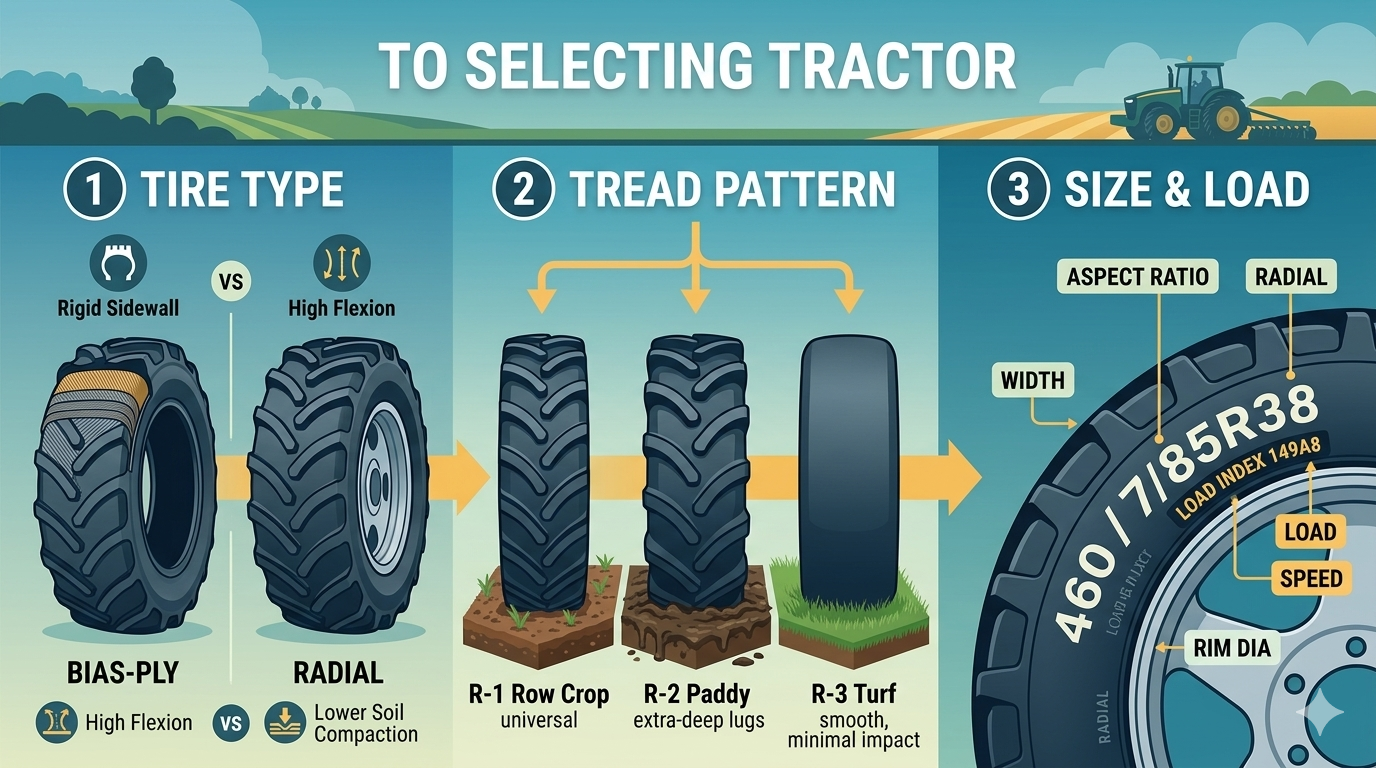
Once you have established your tractor's baseline specifications and regional needs, it is time to look at the specific technical and structural dimensions of the tire itself. Use this actionable guide to make an informed, practical choice that optimizes field performance and maximizes tire lifespan.
Matching the specific tire category to your geographic and crop terrain is the most critical factor in preventing tire slippage or premature wear.
Paddy Field Tires (Wetland): Engineered with ultra-deep lugs and specialized anti-sinking geometry. Essential for muddy rice paddies across Southeast Asia and wet river basins in South America to prevent immobilization and slippage.
Dry Land Tires (General Ag): The industry standard featuring versatile tread depths. Optimized for excellent self-cleaning, reliable drainage, and long wear life on typical dry soil and plains, effortlessly balancing heavy tillage with short-haul road transport.
Orchard & Vineyard Tires: Designed with a narrow section width and a low, flexible profile. This minimizes soil compaction around delicate root systems and prevents low-profile tractors from damaging low-hanging branches or closely planted row crops.
Desert & Off-Road Tires: Constructed with extra-thick rubber compounds and deep, aggressive traction grooves. These tires offer maximum puncture resistance and superb grip across arid Middle Eastern deserts and rugged, rocky South American terrains.
Dedicated Transport Tires: Feature a flatter tread profile and specialized center-block patterns. Built for high-frequency road haulage, they minimize rolling resistance, significantly reduce fuel consumption, and prevent rapid pavement wear.
Reading tire sidewall markings correctly ensures you do not waste capital on ill-fitting components.
Decoding Size Markings: Standard ag tire markings (e.g., metric sizes like 420/85R24 or standard sizes like 18.4-38) communicate section width, aspect ratio, construction type, and rim diameter. Always verify these numbers against your tractor manual before ordering.
Load Index & Speed Ratings: Every tire has a specific load capacity rating. You must select a rating that easily accommodates the gross weight of your tractor plus your heaviest 3-point hitch or front-loader implements to prevent catastrophic sidewall blowouts.
Field Inflation Adjustments: Operational efficiency relies heavily on managing tire pressure:
In the Field: Lower the inflation pressure to increase the tire footprint, maximize traction, and minimize harmful soil compaction.
On the Highway: Raise the inflation pressure to ensure structural stability, decrease rolling resistance, and eliminate uneven tread wear during fast transport.
The materials and architecture of a tire dictate its longevity and overall operating comfort.
Advanced Rubber Compounds: High-tier tires utilize premium, wear-resistant natural rubber blends. For tropical or desert climates, search for compounds enriched with specialized anti-aging and high-heat-resistant additives to prevent dry-rotting and cracking.
Casing Architecture: Radial vs. Bias-Ply:
Radial Tires: Flexible sidewalls create a wider, flatter footprint. Benefits: Exceptional traction, lower fuel consumption, maximum crop protection, and a smoother operator ride. Highly recommended for primary high-horsepower field tractors.
Bias-Ply Tires: Rigid, multi-layered diagonal cords create stiff sidewalls. Benefits: Extremely cut- and puncture-resistant against stumps, roots, and sharp rocks at a lower upfront cost. Best for utility work, forestry, and rugged construction settings.
Certifications & Compliance: Prioritize manufacturers carrying reputable international quality benchmarks (such as ISO9001, CE, or DOT). This ensures structural consistency, reliable field performance, and dependable aftermarket warranty support.
Small details make a massive difference in the day-to-day productivity and lifespan of your machinery.
Tread Design Nuances: Tread geometry alters performance. Deep, widely spaced lugs are mandatory for discharging sticky mud, while closely spaced, shallower blocks are superior for distributing weight evenly on hard, dry plains.
4WD Lead/Lag Ratios: For Four-Wheel Drive (4WD) or Mechanical Front Wheel Drive (MFWD) tractors, the front and rear tire rolling circumferences must maintain a precise ratio. Incorrectly pairing front and rear tire sizes causes drivetrain binding, rapid tire wear, and expensive transmission failures.
Bespoke Regional Upgrades: If your farming hub presents extraordinary challenges, ask your supplier for customized modifications. This includes specialized salt-and-spray resistant coatings for coastal farms, or reinforced bead locks to handle ultra-low pressures in deep mud or sand.
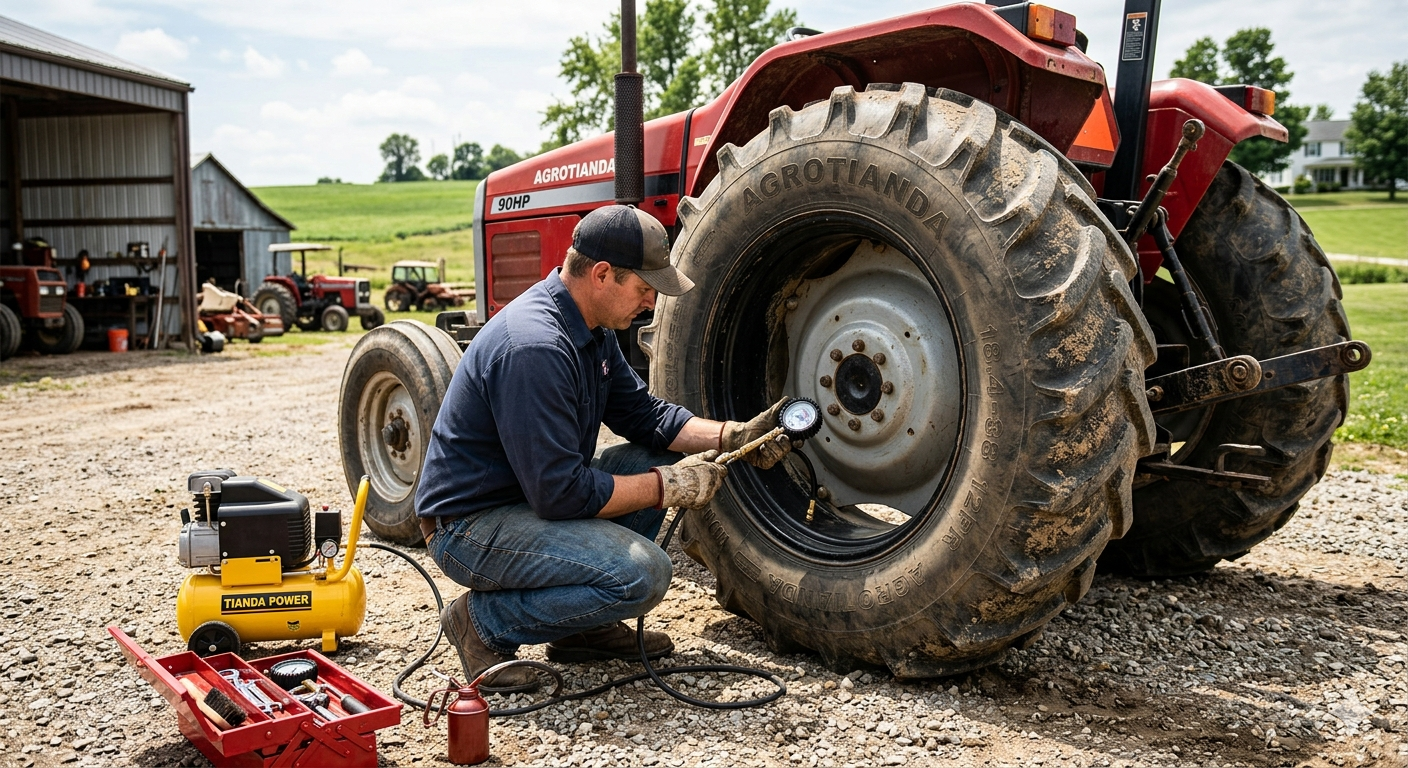
Investing in the perfect tractor tire is only the first step. To maximize your return on investment and avoid costly premature replacements, implement these three simple yet highly effective maintenance habits:
Conduct Routine Inspections: Make it a habit to check tire pressure and tread wear before heavy operations. Visually inspect the sidewalls for deep cuts, bulges, or embedded debris. Catching small punctures or carcass damage early allows for timely repairs and prevents catastrophic blowouts in the field.
Implement Proper Off-Season Storage: When your tractor or spare tires are idle for extended periods, store them correctly to prevent premature rubber degradation. Keep tires off the cold, damp ground using blocks or racks. Store them in a cool, dry, and dark environment away from direct sunlight, ozone sources (like electric motors), and volatile chemicals to stop dry-rotting.
Execute Scenario-Specific Pressure Adjustments: Never run a "one-size-fits-all" tire pressure. Constantly adjust your inflation levels when transitioning between deep field tillage and high-speed road hauling. Running low field pressures on hard pavement causes rapid center-tread wear, while running high road pressures in mud leads to excessive wheel slippage and high fuel consumption.
Choosing the right tractor tire ultimately comes down to a simple formula: Match Your Tractor Specifications + Adapt to Your Geographic Terrain + Prioritize Build Quality. By carefully evaluating your local soil conditions, operational intensity, and horsepower requirements, you can eliminate guesswork and secure a tire that boosts your farm's productivity.
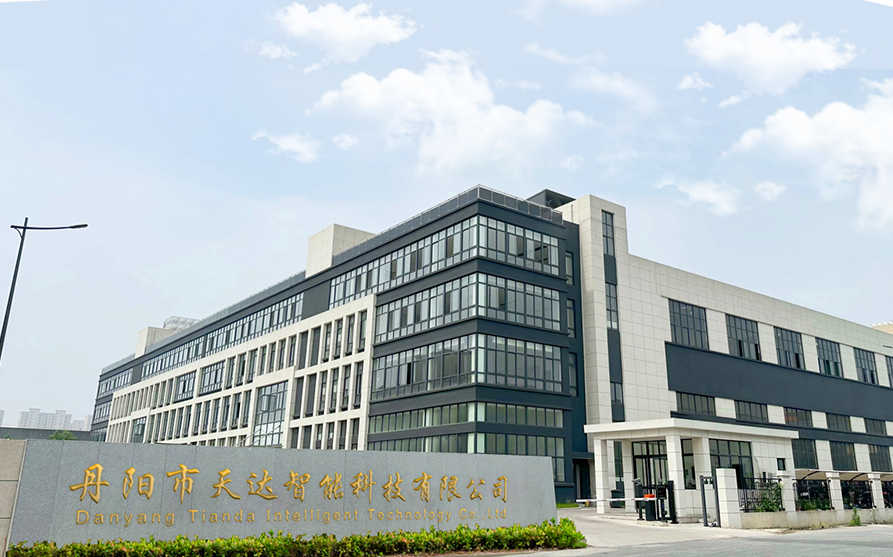
Every agricultural hub has its own unique challenges, from the muddy rice paddies of Southeast Asia to the harsh, sandy terrains of the Middle East. Don't leave your machinery's efficiency to chance.
Contact Agrotianda's Technical Team Today for a free, customized tire configuration consultation tailored specifically to your tractor’s horsepower and regional environment. Explore our certified range of heavy-duty, high-traction agricultural tires engineered to help you Create Quality and Harvest Future.